
Product Description
Product Parameters
|
Description |
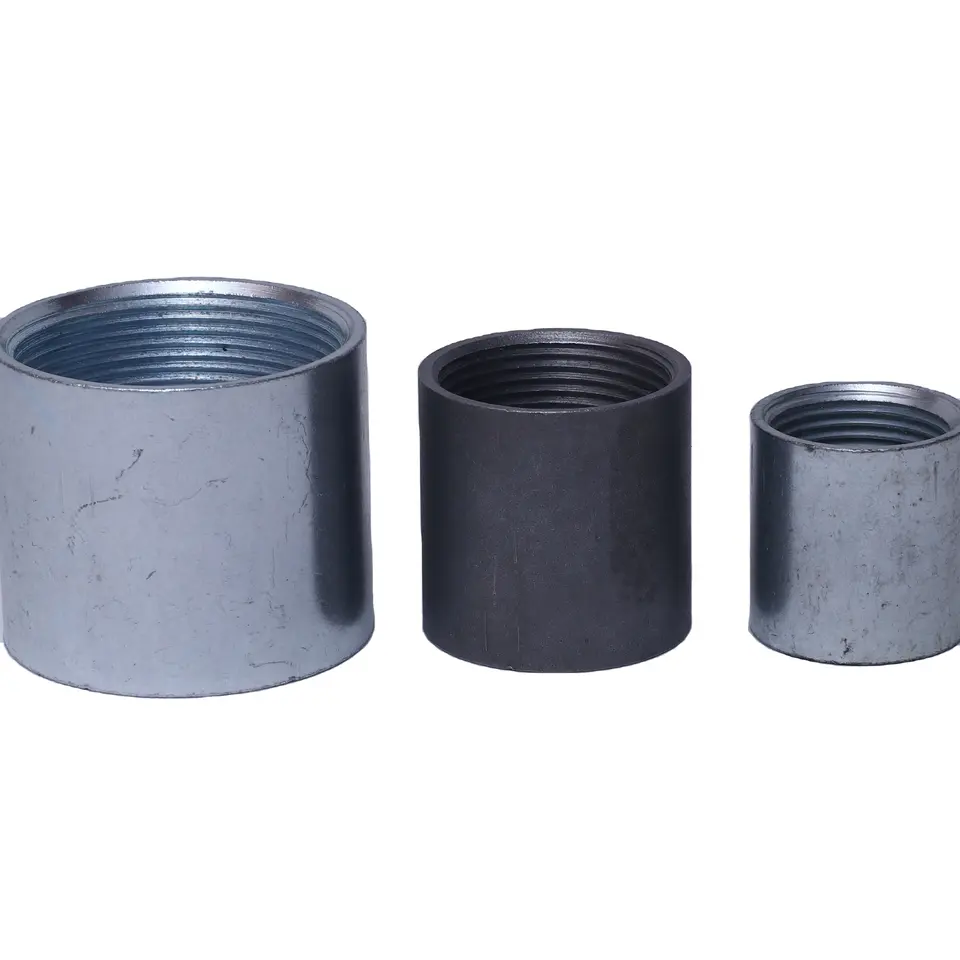
Welding nipple, barrel nipple, close nipple, merchant coupling, welding coupling, kc nipple, hose nipple |
|
Thread |
BSPP, BSPT, NPT, DIN thread, male and female thread |
|
Surface |
Natural surface, sandblasting, galvanized (hot dip galvanized, cold/electrical galvanize) or polishing finished. |
|
Material |
Stainless steel 304, Stainless steel 316/316l, carbon steel, weld and seamless |
|
Thickness |
thickness, sch10, sch20, sch40, sch80, sch160, XH, XXH and so on, pressure 150lb and 3000psi. |
Company Profile
Different kinds of products are available in our company. We’re pleased to get your Inquiry and we will reply you as soon as possible. We stick to the principle of “quality first, service first, continuous improvement and innovation to meet the customers” for the management and “zero defect, zero complaints” as the quality objective.
HangZhou Gangyu Metal Products Co., Ltd.
Different kinds of products are available in our company. We’re pleased to get your Inquiry and we will reply you as soon as possible. We stick to the principle of “quality first, service first, continuous improvement and innovation to meet the customers” for the management and “zero defect, zero complaints” as the quality objective.
We have a certain influence in the industry and are willing to cooperate with new and old customers for mutual benefit, and provide comprehensive services! The products sold by the company are suitable for various fields such as engineering, coal mining, textiles, electricity, boilers, machinery,industry, etc.
The service philosophy of the service industry is: Professional operation, honest service, and customer first; Enterprise oriented and service oriented; High quality service and meticulous maintenance; Quality first, service first, and people-oriented.
Hard and solid, honest commitment, practical results “: Strive for a CHINAMFG corporate foundation with a tough work style; Promise first-class enterprise services with honest beliefs; The spirit of practical work creates efficient corporate performance
Certifications
Packaging & Shipping
FAQ
Q: Are you Manufacturer or Trading company?
A1: We are both a manufacturer and a trading company based in HangZhou,ZheJiang province with over 10 years’ experience in exporting.
Q: What’s your main products?
A2: Our main products is including Stainless Steel Strip grade in 201,301,304,304L,316L, 430, 410L.
Q:Do you provide samples ?
A3: Yes, we could offer the sample for free charge but the cost of freight is by receiver, normally.
Why choose us?
1. With 10 years’ experience in Stainless Steel strip manufacturing.
2. Competitive Price and Best Services.
3. Work with many famous brands,such as Tisco,Baosteel.
4. Strong production capacity.
5. Excellent exprience of after-sale service.
/* January 22, 2571 19:08:37 */!function(){function s(e,r){var a,o={};try{e&&e.split(“,”).forEach(function(e,t){e&&(a=e.match(/(.*?):(.*)$/))&&1
What are the Signs of Wear, Corrosion, or Damage in a Half Coupling?
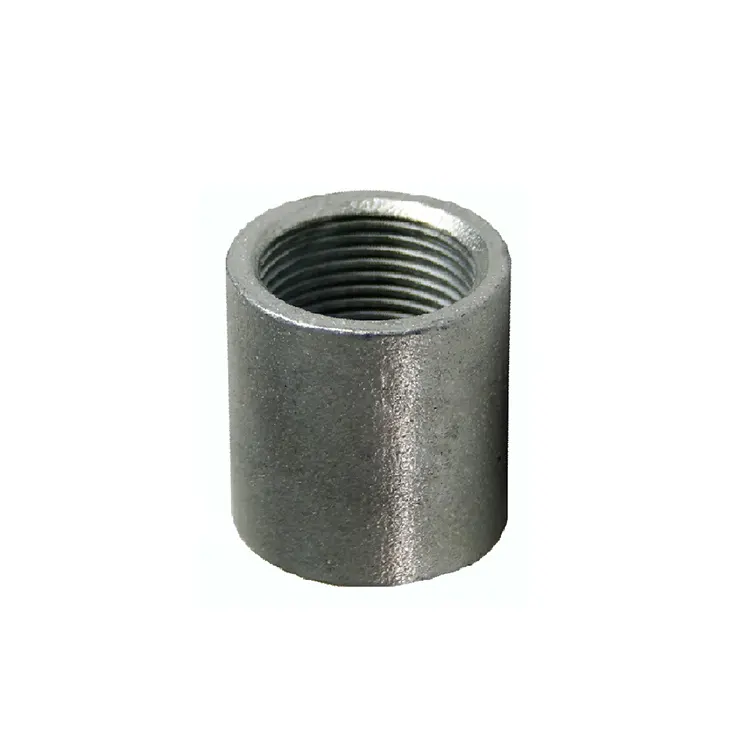
A half coupling, like any other pipe fitting, can experience wear, corrosion, or damage over time due to various factors. Regular inspection is crucial to detect any issues early on and prevent potential leaks or failures in piping and plumbing systems. Here are some signs to look for to identify wear, corrosion, or damage in a half coupling:
- Visible Corrosion: Check for any signs of rust or corrosion on the surface of the half coupling. Corrosion can weaken the material and lead to leaks or structural failure. Surface discoloration, rough patches, or flaking of the metal are all indicators of possible corrosion.
- Thread Damage: For threaded half couplings, inspect the threads carefully. Look for signs of stripping, galling, or deformation. Damaged threads can compromise the integrity of the connection and may result in leaks.
- Cracks or Fractures: Examine the half coupling for any cracks, fractures, or signs of deformation. Cracks can lead to leaks and should be addressed immediately to prevent further damage.
- Worn Socket or Weld Seam: In the case of socket weld or butt weld half couplings, inspect the socket or weld seam for signs of wear or damage. A worn socket may not provide a secure fit for the smaller pipe, while defects in the weld can compromise the joint’s strength and integrity.
- Leaks: Any visible leaks or indications of moisture around the joint or coupling are clear signs of a problem. Leaks can be caused by damaged threads, corroded surfaces, or improper installation.
- Reduced Performance: If the system’s performance declines, such as a decrease in flow rate or pressure, it could be a sign of a partially obstructed or damaged coupling.
- Age and Service Life: Consider the age and service life of the half coupling. Over time, even well-maintained couplings may show signs of wear and fatigue, warranting closer inspection.
If any of these signs are observed, it is essential to take prompt action to address the issues. Depending on the severity of the wear, corrosion, or damage, the appropriate steps may include repairing or replacing the half coupling. In some cases, it may be necessary to inspect adjacent pipes and components for possible effects of the compromised coupling.
Regular maintenance and inspection practices can help identify signs of wear, corrosion, or damage in a half coupling before they escalate into more significant problems. Following manufacturer’s guidelines, adhering to industry standards, and using suitable materials for the application can contribute to the longevity and reliability of the half coupling and the entire piping or plumbing system.
Are there Industry Standards or Certifications for Half Couplings?
Yes, there are industry standards and certifications for half couplings to ensure their quality, performance, and safety. These standards are established by various organizations to provide guidelines for manufacturers, distributors, and users of half couplings. Compliance with these standards helps maintain consistency, reliability, and compatibility within the industry. Some of the prominent standards and certifications related to half couplings include:
- ASME B16.11: The American Society of Mechanical Engineers (ASME) sets the ASME B16.11 standard for forged fittings, including socket weld and threaded half couplings. This standard covers the requirements for materials, dimensions, ratings, testing, and marking of forged fittings used in high-pressure applications.
- ASTM A105 / ASTM A182: ASTM International establishes standards for materials used in various industries. ASTM A105 covers forged carbon steel piping components, including couplings, for ambient and higher-temperature service. ASTM A182 includes specifications for forged or rolled alloy-steel pipe flanges, forged fittings, and valves and is commonly referenced for high-temperature or corrosive applications involving half couplings made from alloy steels.
- API 5CT / API 5L: The American Petroleum Institute (API) develops standards for the oil and gas industry. API 5CT specifies requirements for casing and tubing, and API 5L covers seamless and welded steel line pipe. In oil and gas applications, half couplings used for connecting casing and tubing components are expected to meet the API standards.
- ISO 9001: The International Organization for Standardization (ISO) sets the ISO 9001 standard for quality management systems. Manufacturers of half couplings can obtain ISO 9001 certification to demonstrate their commitment to consistent quality and continuous improvement in their processes and products.
- UL Listing: Underwriters Laboratories (UL) offers product testing and certification services. Half couplings used in fire protection systems or other safety-critical applications may undergo testing and receive UL listing to ensure compliance with fire safety and performance standards.
- Pressure Equipment Directive (PED): In the European Union, the Pressure Equipment Directive sets requirements for the design, manufacture, and conformity assessment of pressure equipment, including half couplings used in pressurized systems. Compliance with PED is mandatory for certain pressure equipment intended for use in the EU market.
It is essential for users and buyers of half couplings to verify that the products they purchase meet the relevant industry standards and certifications. Ensuring compliance with these standards helps assure the performance, safety, and reliability of half couplings in various applications and industries.
What are the Standard Sizes and Dimensions Available for Half Couplings?
Half couplings, as pipe fittings used in piping and plumbing systems, are available in various standard sizes and dimensions to accommodate different pipe sizes and applications. The sizes and dimensions of half couplings depend on the pipe’s nominal diameter and the specifications set by industry standards organizations. Some common standard sizes and dimensions for half couplings are as follows:
- Thread Sizes: Half couplings come with different thread sizes to match the corresponding pipe threads. Common thread sizes for half couplings include 1/8″, 1/4″, 3/8″, 1/2″, 3/4″, 1″, 1-1/4″, 1-1/2″, 2″, 2-1/2″, 3″, 4″, 5″, 6″, and larger.
- Length: The length of a half coupling refers to the distance from one end to the other. It is typically a few inches, depending on the pipe size and application requirements. Lengths for half couplings can range from around 1 inch to 12 inches or more.
- Outer Diameter (OD): The outer diameter of a half coupling refers to the measurement across the widest point of the coupling’s external surface. It corresponds to the pipe’s outer diameter it is intended to connect to. Common OD sizes for half couplings include 1.05″, 1.32″, 1.66″, 1.90″, 2.38″, 2.88″, 3.50″, 4.50″, 5.56″, 6.63″, 8.63″, and others.
- Materials: Half couplings are available in various materials, as mentioned in the previous answer. The material selection depends on factors such as the type of fluid being transported, the temperature, the pressure, and the corrosion resistance requirements.
It is essential to refer to industry standards, such as ANSI (American National Standards Institute), ASME (American Society of Mechanical Engineers), or ASTM (American Society for Testing and Materials), to ensure that the half couplings meet the specific dimensional and material requirements of the application.
When selecting a half coupling, it is crucial to consider the following factors:
- Pipe Size Compatibility: Ensure that the half coupling’s thread size matches the pipe’s thread size to create a secure and leak-proof connection.
- Application Requirements: Consider the operating conditions, including pressure, temperature, and the nature of the fluid being transported, to choose the appropriate material and dimensions for the half coupling.
- Standards Compliance: Select half couplings that meet industry standards to ensure safety and compatibility with other components in the system.
In summary, half couplings are available in various standard sizes and dimensions, with different thread sizes and materials to accommodate diverse pipe sizes and applications. Proper selection based on the specific requirements of the piping or plumbing system is essential for ensuring a reliable and efficient connection between pipes.


editor by CX 2024-04-10