
Product Description
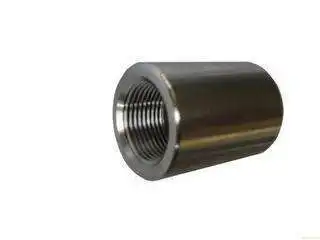
Customized Threaded Half Coupling (YZF-C252)
| Material | stainless steel, carbon steel, alloy steel |
| Standard | ANSI B16.11 |
| Size | 1/8″ -8″ |
| Pressure rating | 1500lb, 2000lb, 3000lb, 6000lb, 9000lb |
| Finish | Hot Dipped Galvanized, Electro Galvanized, Natural finished, Chemical black |
| Type | Half Coupling, Full Coupling, Reducing Coupling & Customized Coupling |
| Marking | standard or as customer’ s need |
| Inspection | in-house or the third party |
| Application | Petroleum, chemical, machinery, electric power, shipbuilding, construction, etc |
| Delivery Time | within 25-30 days after we have confirmed your order |
| MOQ | 10 pieces |
| Packing | wooden cases or pallets or as per requirement |
| Productivity | 300000 tons per year |
More Pictures:
Company Information:
1:Professional pipe fittings factory, we can manufacture all kinds of pipe fittings.
2:The spirit of our company: Scientific Development, Constant Progress, Harmonious Cooperation, CHINAMFG Integrity.
3:The principle of operation: Coordinate, Development, Mutual Benefit, Common prosperity, Customer First.
4:The attitude of work: Work together, Enjoy Together, Progress Together, Develop Together.
5:Export-oriented factory. Export to North America, Eastern Europe, Southeast Asia, Africa, Oceania, Mid East, Eastern Asia, Western Europe, Central America as well as other regions.
FAQ:
Q1: Are you trading company or manufacturer?
We, CHINAMFG COMPANY LTD. CO., is a combination of production and trade, industry integration business.
Q2: Is the price of your products lower than others?
We can not promise you the lowest price,because the best quality is what we pursue firstly.
Q3: What’s your payment terms?
We recommend our customer different terms of payment based on different order amount. Paypal, Western Union, T/T, LC are all acceptable.
Q4: Can you provide us with some samples for testing?
A: Of course, we can offer you samples.You only need to bear the freight and samples’ charge can be negotiated.
Q5: How about your service?
A: We have pre-sale service, in-sale service and after-sale service. As “Customer First” is the most important principle of company operation.
If any problems not in the above-mentioned answers, you can contact us directly. We will help you to solve the problem with carefulness and patience.
Are there Specific Safety Considerations when Using Half Couplings in High-Pressure Systems?
Yes, there are specific safety considerations to keep in mind when using half couplings in high-pressure systems. High-pressure applications pose unique challenges, and it is crucial to follow safety protocols to prevent potential hazards and ensure the integrity of the piping or plumbing system. Here are the key safety considerations:
- Pressure Ratings: Ensure that the half couplings used in high-pressure systems are rated for the intended pressure levels. Half couplings have specific pressure ratings based on their design and material. Exceeding these ratings can lead to coupling failure and catastrophic leaks.
- Material Selection: Choose half couplings made from suitable materials capable of withstanding the pressures and conditions of the system. High-pressure applications often require stronger and more durable materials, such as stainless steel or high-grade alloys.
- Proper Installation: Accurate and proper installation is critical in high-pressure systems. Follow the manufacturer’s guidelines and industry best practices during installation to ensure a secure and leak-free connection. Improper installation can lead to coupling failure under pressure.
- Weld Quality: For socket weld and butt weld half couplings, the quality of the weld is paramount in high-pressure systems. Only qualified welders should perform the welding, and the welds must be thoroughly inspected to ensure they meet the necessary standards for strength and integrity.
- Inspections and Testing: Regularly inspect the half couplings and the entire system for signs of wear, damage, or leaks. Implement non-destructive testing methods to assess the integrity of the couplings and welds. Pressure testing the system periodically can help identify potential weaknesses and ensure its reliability.
- Temperature Considerations: High-pressure systems can generate significant heat, and temperature fluctuations can impact the integrity of the couplings. Ensure that the chosen materials can handle the temperature variations experienced in the system without compromising their strength and performance.
- Stress Analysis: Conduct stress analysis of the piping system to identify potential stress points and ensure that the half couplings can handle the applied stresses. Proper support and anchoring of the system can reduce the stress on the couplings and prevent failures.
- Training and Safety Protocols: Ensure that personnel working with high-pressure systems are well-trained and aware of the safety protocols. They should understand the potential risks associated with the system and know how to respond to emergencies or leaks effectively.
- Emergency Shutdown Procedures: Establish clear and effective emergency shutdown procedures in case of unforeseen incidents. This can help minimize damage and risks to personnel in the event of a coupling failure or system breach.
By taking these safety considerations into account, operators can mitigate the risks associated with using half couplings in high-pressure systems. Proper planning, material selection, installation, and maintenance are key to ensuring the safe and reliable operation of the system under high pressure.
What are some Real-World Examples of Half Coupling Usage in Different Industries?
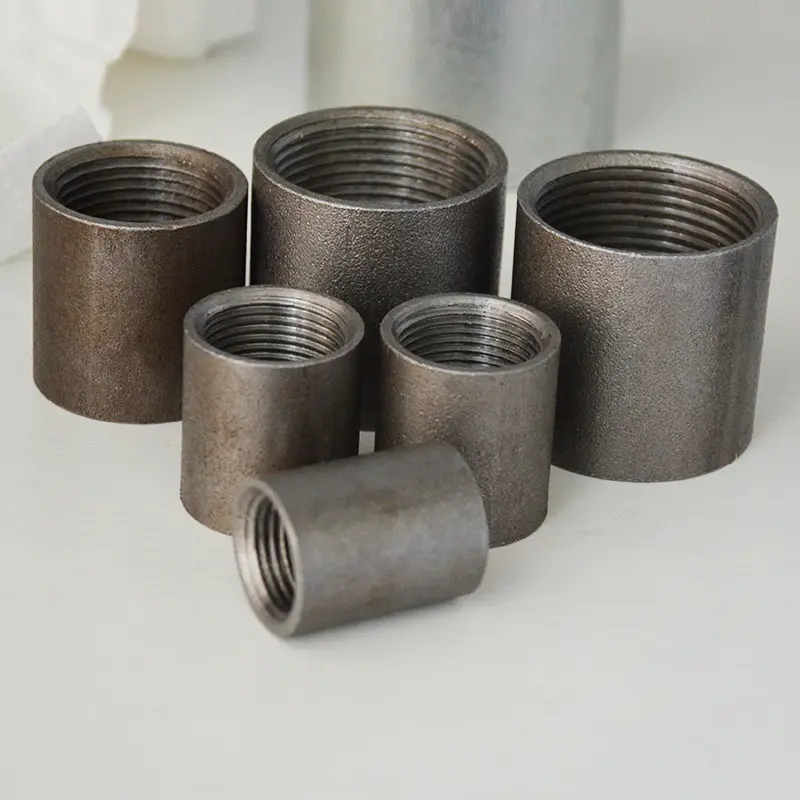
Half couplings are widely used in various industries to create reliable connections between pipes and components. Here are some real-world examples of half coupling usage in different industries:
- Oil and Gas Industry: In the oil and gas sector, half couplings are commonly used in pipelines for crude oil, natural gas, and refined products transportation. They are also employed in offshore platforms, refineries, and petrochemical plants to connect pipes and fittings in high-pressure and corrosive environments.
- Chemical Processing: The chemical industry utilizes half couplings to connect pipes carrying various chemicals and corrosive substances. The coupling’s resistance to corrosion is vital to ensure the integrity of the piping system in these applications.
- Power Generation: In power plants, half couplings are employed in steam and water pipelines, allowing efficient transfer of heat and fluids in boilers and condensers. They are also used in cooling water systems and various auxiliary processes.
- Food and Beverage: In food processing facilities, stainless steel half couplings are widely used due to their hygienic properties. They help connect pipes in systems for handling water, beverages, dairy products, and other food items, ensuring sanitation and preventing contamination.
- Marine Industry: Half couplings are used in shipbuilding and offshore structures to create connections in piping systems for various applications, including cooling, ballast, and fuel transfer.
- Water and Wastewater Treatment: In municipal water supply and wastewater treatment plants, half couplings are employed to connect pipes and fittings in water distribution and treatment systems, as well as in sewer networks.
- Agriculture: In agricultural settings, half couplings are used to connect pipes for irrigation systems, water supply, and chemical distribution in farming operations.
- Manufacturing: The manufacturing industry utilizes half couplings in various fluid and gas transfer systems for machinery and equipment, as well as in compressed air lines.
- Construction: In construction projects, half couplings are used to connect pipes for plumbing, HVAC systems, and other applications in buildings and infrastructure projects.
- Fire Protection: In fire sprinkler systems, half couplings are employed to connect pipes carrying water or other fire suppressant agents, ensuring effective fire protection in commercial, industrial, and residential buildings.
These examples demonstrate the versatility and significance of half couplings in different industries, where they play a crucial role in creating leak-free and reliable connections in piping systems. The choice of the half coupling material, size, and specifications may vary depending on the specific application and the environmental conditions in which it operates.
Can a Half Coupling be Used to Join Pipes of Different Diameters?
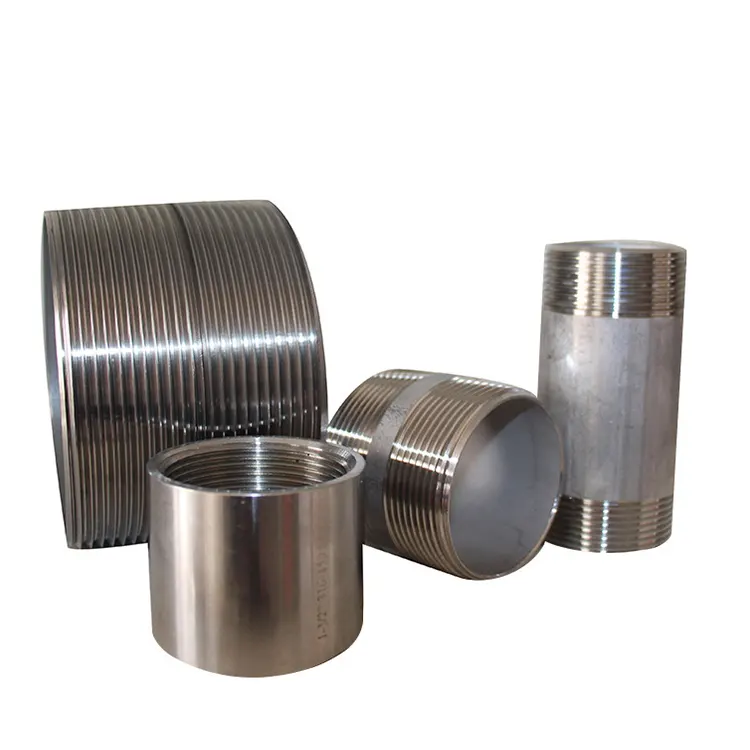
Yes, a half coupling can be used to join pipes of different diameters in piping and plumbing systems. Half couplings are specifically designed to connect two pipes of different sizes, making them ideal for creating transitions or connections between pipes with varying diameters. The larger end of the half coupling is welded or screwed onto the larger diameter pipe, providing a stable base for the connection. The smaller pipe, which has a different diameter, is then threaded or inserted into the smaller end of the half coupling.
The ability to join pipes of different diameters is one of the main advantages of using half couplings. This feature allows for efficient and smooth transitions between pipe sizes, which is crucial in maintaining proper fluid flow, reducing pressure losses, and preventing turbulence within the system.
Here are some common scenarios where half couplings are used to join pipes of different diameters:
- Reducing Pipe Size: When a pipeline needs to change from a larger diameter to a smaller diameter, a half coupling can be employed to create a smooth transition. For example, if a process requires a reduction in flow rate, a smaller pipe can be connected to the main pipeline using a half coupling.
- Connecting Equipment or Valves: In many industrial applications, equipment, valves, or instruments are connected to the main pipeline using half couplings. Often, these components have different pipe sizes than the main pipeline, and a half coupling provides a secure and leak-proof joint.
- Repair and Maintenance: During repair or maintenance operations, a damaged section of the pipeline can be cut out, and a new pipe of a different diameter can be connected using a half coupling. This allows for quick repairs without having to replace the entire pipeline.
When using a half coupling to join pipes of different diameters, it is essential to ensure that the threads and dimensions of the coupling match the pipes being connected. Proper sealing techniques, such as using thread sealant or Teflon tape, should also be applied to prevent leaks and ensure a reliable connection.
In conclusion, half couplings are versatile pipe fittings that enable the joining of pipes with different diameters. Their ability to facilitate smooth transitions and secure connections makes them invaluable in various industrial, commercial, and residential applications.


editor by CX 2023-11-20