
Product Description
Stainless Steel Coupling With Male /Female Thread
Product Description
1.Material:SS 304,316,201 etc.
2.Connector:Thread connector,Male
3.Thread:BSP/NPT/DIN
4.Size:1/8~6 inch OEM service stainless steel hexagon bushing,bsp/npt
5. Technology:Investment casting.precision casting,CNC machine
6.Application: They are widely used as linkages of pipes for the transportation of water ,oil, gas and every kind of corrosive suitable for stainless steel.
7.Pressure:150LBS,200LBS
8.Function:Contect the pipeline.
9. Feature: High temperature resistant, Corrosion-resistant, Oil-proof, Oxidation-resistance, Clean and deburr.
FAQ
Q:Why choose us ?
A: we are a manufacturer, we have been manufacturing ball valve 15 years .
Q. what is your payment term?
A: T/T 30% down payment, balance to be paid before shipment. or L/C.
Q:Can we print our logo on your products?
A: yes, we offer OEM/ODM service, we support the customized logo, size, package,etc.
Q: what is your main market?
A: North America, South America, Eastern Europe, Southeast Asia, Africa, Oceania, Mid East, Eastern Asia, Western Europe
Q: Can I get samples from your factory?
A: Yes, Samples can be provided.
Q: If products have some quality problem, how would you deal with?
A: We will responsible for all the quality problems.
Q:How about your capacity?
A:As you know,we have 100staffs,own 50 CNC machines,and five person
in charge of quality inspection. So please believe us we can deliver valves as your order.
/* January 22, 2571 19:08:37 */!function(){function s(e,r){var a,o={};try{e&&e.split(“,”).forEach(function(e,t){e&&(a=e.match(/(.*?):(.*)$/))&&1
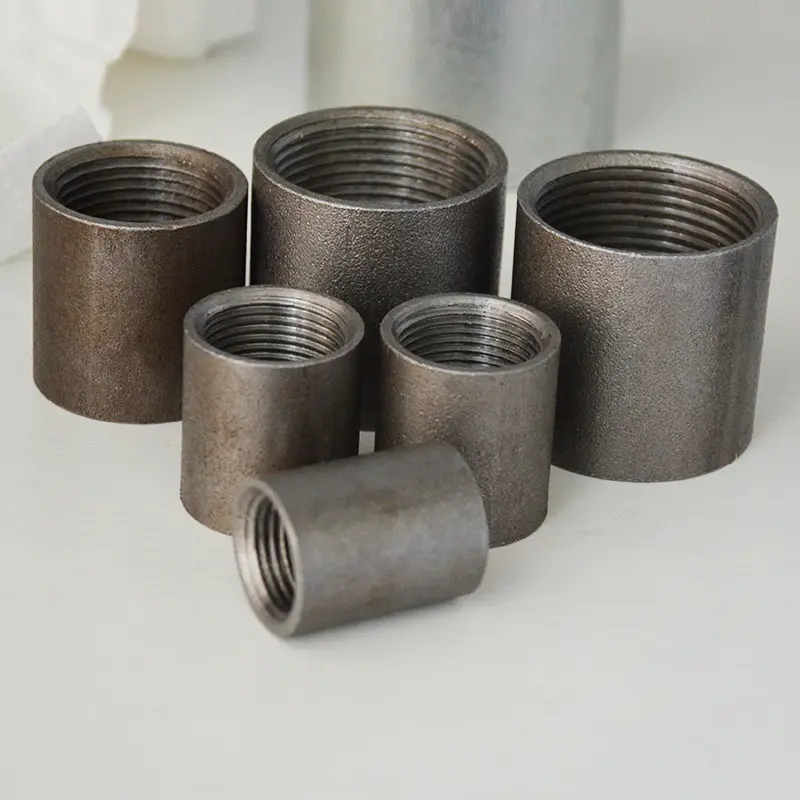
Can a Half Coupling be Threaded or Welded onto Pipes?
Yes, a half coupling can be both threaded and welded onto pipes in piping and plumbing systems. The method of attachment depends on the type of half coupling and the specific application requirements.
Threaded Half Coupling: Threaded half couplings have internal threads on one end, allowing for easy connection to pipes with matching external threads. To install a threaded half coupling, the larger end with internal threads is screwed onto the male threads of the larger diameter pipe. The smaller pipe is then threaded into the other end of the half coupling, creating a secure and leak-proof joint. Threaded half couplings are commonly used when frequent disassembly may be required or when connecting components like valves or instruments to the pipeline.
Socket Weld Half Coupling: Socket weld half couplings have a socket on one end, which allows for the insertion of the pipe without threading. The joint is then welded for a strong and permanent connection. The larger diameter pipe is inserted into the socket, and a fillet weld is applied around the outside of the coupling to secure the smaller pipe. Socket weld half couplings are often used in high-pressure applications and systems that require a robust and reliable connection.
Butt Weld Half Coupling: Butt weld half couplings are designed for butt welding, which involves welding the coupling directly to the larger pipe end. The smaller pipe is inserted into the other end of the half coupling, and a butt weld is applied to secure the joint. Butt weld half couplings are commonly used in critical applications where a smooth and continuous inner surface is required to prevent turbulence and pressure losses.
The choice between threaded and welded half couplings depends on factors such as the operating conditions, the type of fluid being transported, and the required joint strength. Threaded half couplings offer ease of installation and disassembly, making them suitable for applications where frequent maintenance is needed. On the other hand, socket weld and butt weld half couplings provide permanent and strong connections, making them suitable for high-pressure and critical systems.
Regardless of the method of attachment, it is essential to ensure proper installation and adherence to industry standards to achieve a secure and leak-free connection. Regular inspection and maintenance of the half couplings and the entire piping system are also necessary to detect any signs of wear, corrosion, or damage and address them promptly.
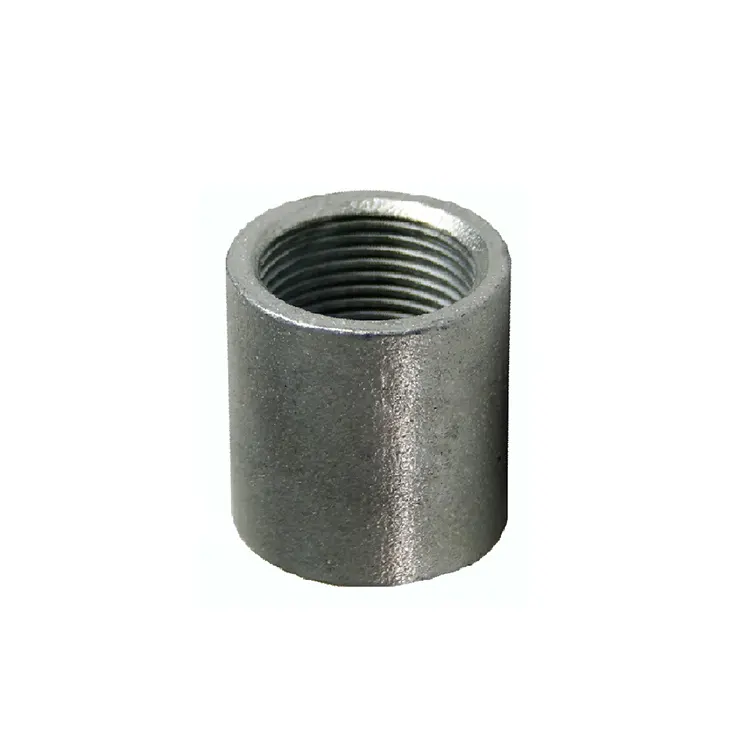
Are there Industry Standards or Certifications for Half Couplings?
Yes, there are industry standards and certifications for half couplings to ensure their quality, performance, and safety. These standards are established by various organizations to provide guidelines for manufacturers, distributors, and users of half couplings. Compliance with these standards helps maintain consistency, reliability, and compatibility within the industry. Some of the prominent standards and certifications related to half couplings include:
- ASME B16.11: The American Society of Mechanical Engineers (ASME) sets the ASME B16.11 standard for forged fittings, including socket weld and threaded half couplings. This standard covers the requirements for materials, dimensions, ratings, testing, and marking of forged fittings used in high-pressure applications.
- ASTM A105 / ASTM A182: ASTM International establishes standards for materials used in various industries. ASTM A105 covers forged carbon steel piping components, including couplings, for ambient and higher-temperature service. ASTM A182 includes specifications for forged or rolled alloy-steel pipe flanges, forged fittings, and valves and is commonly referenced for high-temperature or corrosive applications involving half couplings made from alloy steels.
- API 5CT / API 5L: The American Petroleum Institute (API) develops standards for the oil and gas industry. API 5CT specifies requirements for casing and tubing, and API 5L covers seamless and welded steel line pipe. In oil and gas applications, half couplings used for connecting casing and tubing components are expected to meet the API standards.
- ISO 9001: The International Organization for Standardization (ISO) sets the ISO 9001 standard for quality management systems. Manufacturers of half couplings can obtain ISO 9001 certification to demonstrate their commitment to consistent quality and continuous improvement in their processes and products.
- UL Listing: Underwriters Laboratories (UL) offers product testing and certification services. Half couplings used in fire protection systems or other safety-critical applications may undergo testing and receive UL listing to ensure compliance with fire safety and performance standards.
- Pressure Equipment Directive (PED): In the European Union, the Pressure Equipment Directive sets requirements for the design, manufacture, and conformity assessment of pressure equipment, including half couplings used in pressurized systems. Compliance with PED is mandatory for certain pressure equipment intended for use in the EU market.
It is essential for users and buyers of half couplings to verify that the products they purchase meet the relevant industry standards and certifications. Ensuring compliance with these standards helps assure the performance, safety, and reliability of half couplings in various applications and industries.
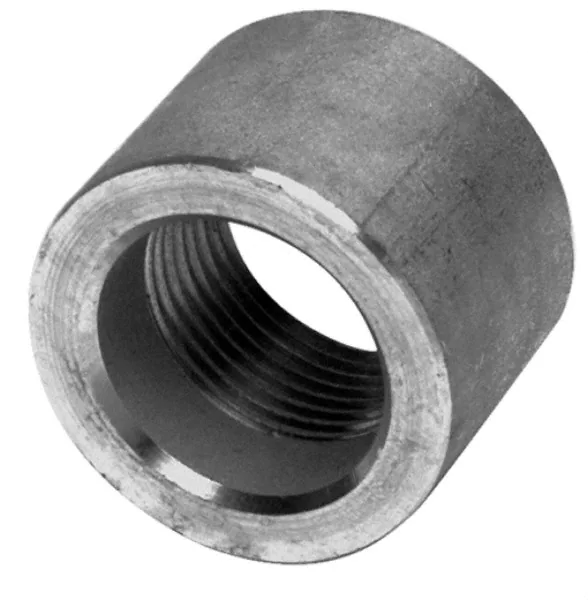
How does a Half Coupling Facilitate Pipe Connections and Disconnections?
A half coupling plays a crucial role in facilitating pipe connections and disconnections in piping and plumbing systems. It is a type of pipe fitting used to join two pipes of different sizes. Let’s explore how a half coupling enables these connections and disconnections:
- Connection Process: When two pipes of different sizes need to be connected, a half coupling is used to create a secure joint. The larger end of the half coupling is welded or screwed onto the larger pipe, providing a stable base for the connection. The internal threads on the larger end of the coupling allow for easy attachment of the smaller pipe. The smaller pipe is threaded or inserted into the smaller end of the half coupling, and the connection is tightened to ensure a snug fit. The use of thread sealant or Teflon tape helps prevent leaks at the joint.
- Transitioning Pipe Sizes: One of the primary uses of a half coupling is to transition between pipes of different sizes. For example, when a pipeline needs to change from a larger diameter to a smaller diameter, a half coupling is employed to create a smooth and efficient transition. This allows for the proper flow of fluids or gases without causing abrupt changes that could lead to pressure losses or turbulence.
- Repair and Maintenance: Half couplings are also useful during repair and maintenance operations. In case a section of the pipe is damaged or needs replacement, the damaged portion can be cut out, and a new pipe can be attached using a half coupling. This facilitates quicker and more cost-effective repairs, as it eliminates the need to replace the entire pipeline.
- Connection Points: Half couplings are often used at connection points where other components, such as valves, instruments, or equipment, need to be attached to the pipeline. By providing a secure and leak-proof joint, half couplings ensure the integrity of the overall system.
- Temporary Connections: In some situations, temporary pipe connections may be required. Half couplings are versatile enough to allow for temporary connections that can be easily disassembled when needed. This flexibility is beneficial in scenarios where pipelines need to be altered or reconfigured temporarily for maintenance or testing purposes.
In summary, a half coupling is a crucial pipe fitting that enables efficient and reliable connections between pipes of different sizes. Its versatility, ease of installation, and ability to transition between pipe sizes make it an essential component in various industrial, commercial, and residential applications. Moreover, its role in facilitating quick repairs and temporary connections further enhances its significance in piping and plumbing systems.


editor by CX 2024-04-08