
Product Description
PRODUCT
Stainless steel and carbon steel thread pipe nipples. Welding nipple, barrel nipple, close nipple, merchant coupling, welding
coupling, kc nipple, hose nipple and so on. Natural surface, sandblasting, galvanized (hot dip galvanized, cold/electrical galvanize)
or polishing finished. BSPP, BSPT, NPT, DIN thread, male and female thread. All materials, Stainless steel 201, Stainless steel 304,
Stainless steel 316/316l, carbon steel, weld and seamless pipe. All thickness, sch10, sch20, sch40, sch80, sch160, XH, XXH and
so on, pressure 150lb and 3000psi.
|
Description |
Thread |
Surface |
Material |
Thickness |
|
Welding nipple, barrel nipple, close nipple, merchant coupling, welding coupling, kc nipple, hose nipple |
BSPP, BSPT, NPT, DIN thread, male and female thread |
Natural surface, sandblasting, galvanized (hot dip galvanized, cold/electrical galvanize) or polishing finished. |
Stainless steel 201, Stainless steel 304, Stainless steel 316/316l, carbon steel, weld and seamless |
thickness, sch10, sch20, sch40, sch80, sch160, XH, XXH and so on, pressure 150lb and 3000psi. |
/* March 10, 2571 17:59:20 */!function(){function s(e,r){var a,o={};try{e&&e.split(“,”).forEach(function(e,t){e&&(a=e.match(/(.*?):(.*)$/))&&1
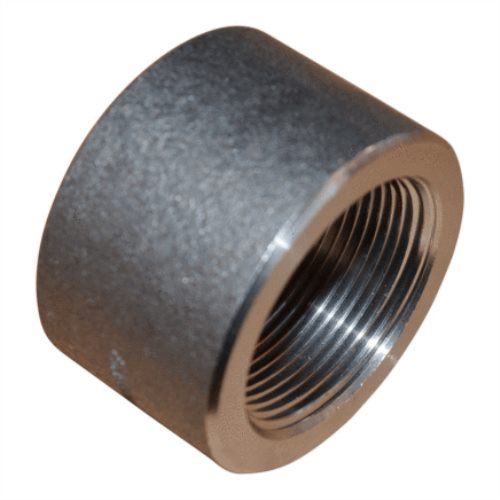
Can a Half Coupling be Used for Both Temporary and Permanent Pipe Connections?
Yes, a half coupling can be used for both temporary and permanent pipe connections, depending on the specific requirements of the application and the type of half coupling used.
Temporary Pipe Connections: Threaded half couplings are commonly used for temporary pipe connections. They allow for easy assembly and disassembly of the pipes without the need for welding. Threaded couplings offer quick installation and are ideal for situations where frequent changes or maintenance are necessary. For example, during construction or testing phases, temporary pipe connections may be required before the final system configuration is established.
Permanent Pipe Connections: Socket weld and butt weld half couplings are primarily used for permanent pipe connections. Once these couplings are welded to the pipes, the joint becomes integral, robust, and permanent. Socket weld couplings are commonly used in smaller diameter pipes, while butt weld couplings are more prevalent in larger diameter pipes and high-pressure applications. These types of couplings are well-suited for applications where a secure and leak-proof connection is essential for the long-term operation of the system.
It is essential to choose the appropriate type of half coupling based on the specific needs of the application. Consider factors such as the system’s operating conditions, pressure requirements, maintenance frequency, and future changes or expansions. Temporary connections using threaded half couplings provide flexibility and ease of maintenance but may not be suitable for high-pressure or critical systems. On the other hand, permanent connections using socket weld or butt weld half couplings offer maximum strength and reliability, but they require careful planning and welding expertise.
In some cases, half couplings may be used temporarily during system assembly or testing and later replaced with socket weld or butt weld couplings for permanent operation. This allows for easier adjustments during the initial setup while ensuring a durable connection in the long run.
Ultimately, the choice between temporary and permanent pipe connections using half couplings depends on the specific requirements of the project and the balance between flexibility and long-term reliability.

Are there Special Half Couplings Designed for Specific Types of Pipes (e.g., Stainless Steel, PVC)?
Yes, there are special half couplings designed to be compatible with specific types of pipes, such as stainless steel, PVC, and other materials. The choice of half coupling material should be based on the properties of the pipe and the requirements of the application. Here are some examples of special half couplings designed for specific types of pipes:
- Stainless Steel Half Couplings: These couplings are specifically designed to be used with stainless steel pipes. Stainless steel is known for its corrosion resistance and is commonly used in applications where the conveyed fluid or gas may be corrosive or require high hygiene standards. Stainless steel half couplings provide a reliable and durable connection in such environments, making them suitable for industries like food processing, pharmaceuticals, chemical processing, and marine applications.
- PVC Half Couplings: PVC pipes are widely used for water supply, drainage, and irrigation systems due to their lightweight, corrosion resistance, and affordability. Special half couplings for PVC pipes are typically made of PVC material or other compatible plastics. These couplings ensure a secure and leak-free connection in PVC pipe systems, especially in residential and agricultural applications.
- CPVC Half Couplings: CPVC (Chlorinated Polyvinyl Chloride) pipes are used in applications where higher temperature and pressure resistance are required compared to standard PVC pipes. CPVC half couplings are designed to be compatible with CPVC pipes, providing a reliable joint for hot water supply, industrial piping, and other high-temperature applications.
- Copper Half Couplings: Copper pipes are commonly used for water supply lines and in refrigeration systems. Half couplings made from copper or brass are suitable for connecting copper pipes, ensuring a tight and durable connection in residential and commercial plumbing systems.
- Galvanized Steel Half Couplings: Galvanized steel pipes are coated with a layer of zinc to enhance their corrosion resistance. Half couplings made from galvanized steel are used with galvanized pipes in outdoor applications or in areas prone to corrosion, such as in sprinkler systems and outdoor water distribution.
- Alloy Steel Half Couplings: In high-pressure and high-temperature applications, where the properties of carbon steel are not sufficient, alloy steel half couplings are used. These couplings are designed to handle the demanding conditions of industries such as oil and gas, petrochemicals, and power generation.
It is essential to select the right half coupling material that matches the properties and requirements of the specific type of pipe in the system. Using a compatible half coupling ensures a reliable and leak-free connection, reduces the risk of corrosion or degradation, and contributes to the overall efficiency and longevity of the piping system.
What are the Different Materials Commonly Used for Manufacturing Half Couplings?
Half couplings are pipe fittings used in piping and plumbing systems to connect two pipes of different sizes. They are available in various materials, each offering unique properties suitable for different applications. Some of the commonly used materials for manufacturing half couplings include:
- Stainless Steel: Stainless steel half couplings are popular due to their excellent corrosion resistance, high strength, and durability. They are ideal for applications involving aggressive or corrosive media and are commonly used in industries such as chemical processing, oil and gas, and food processing.
- Carbon Steel: Carbon steel half couplings are known for their high tensile strength and affordability. They are widely used in industrial applications where the fluid being transported is not corrosive. Carbon steel couplings are commonly used in water supply systems, heating, and ventilation systems.
- Brass: Brass half couplings are valued for their resistance to dezincification and corrosion. They are often used in plumbing systems, particularly for connecting copper pipes. Brass couplings find applications in water supply lines, plumbing fixtures, and other potable water-related applications.
- Copper: Copper half couplings are commonly used in plumbing systems and HVAC (heating, ventilation, and air conditioning) applications. Copper is known for its excellent thermal conductivity and antimicrobial properties, making it suitable for applications where heat transfer and cleanliness are crucial.
- Aluminum: Aluminum half couplings are lightweight and corrosion-resistant, making them suitable for specific industrial and marine applications. They are often used in the transport of certain chemicals and in offshore installations.
- Bronze: Bronze half couplings are known for their strength and resistance to corrosion and wear. They find applications in marine environments, particularly for seawater piping systems, as well as in some oil and gas applications.
The choice of material for half couplings depends on various factors such as the nature of the fluid being transported, the operating conditions, the required strength, and the budget constraints. Proper material selection is essential to ensure the longevity and efficiency of the piping or plumbing system.


editor by CX 2024-02-05