
Product Description
Stainless steel and carbon steel thread pipe nipples. Welding nipple, barrel nipple, close nipple, merchant coupling, welding coupling, kc nipple, hose nipple and so on. Natural surface, sandblasting, galvanized (hot dip galvanized, cold/electrical galvanize) or polishing finished. BSPP, BSPT, NPT, DIN thread, male and female thread. All materials, Stainless steel 201, Stainless steel 304, Stainless steel 316/316l, carbon steel, weld and seamless pipe. All thickness, sch10, sch20, sch40, sch80, sch160, XH, XXH and so on, pressure 150lb and 3000psi.
|
Stainless steel thread pipe fittings |
Ball valves |
Thread |
Surface |
Material |
Thickness |
|
Tee, elbow, socket, union, hex nipple, cap, hex plug, bushing, hose nipple, |
1 pc ball valve, 2pc ball valve, 3pc ball valve, flange ball valve, check valve, gate valve, global valve |
BSPP, BSPT, NPT, DIN thread, male and female thread |
Natural surface |
Stainless steel 201, Stainless steel 304, Stainless steel 316/316l |
150lb, 1000wog, 800psi, 1000psi and 3000psi. |
/* March 10, 2571 17:59:20 */!function(){function s(e,r){var a,o={};try{e&&e.split(“,”).forEach(function(e,t){e&&(a=e.match(/(.*?):(.*)$/))&&1
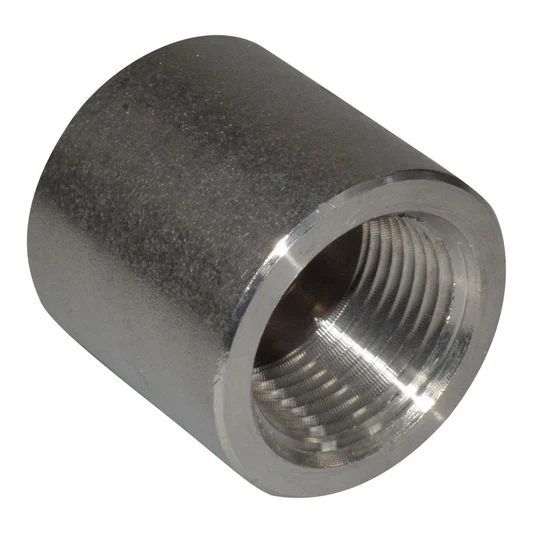
How do Temperature and Environmental Conditions Affect Half Coupling Performance?
The performance of half couplings can be significantly influenced by temperature and environmental conditions. These factors can affect the materials, integrity, and overall functionality of the coupling in various ways. Here’s how temperature and environmental conditions impact half coupling performance:
- Temperature: Extreme temperatures, whether high or low, can affect the properties of the coupling material. For instance, at high temperatures, certain materials may experience reduced strength and increased susceptibility to creep or deformation. On the other hand, low temperatures can make some materials brittle and prone to cracking. It is essential to select half couplings made from materials that can withstand the expected temperature range in the application.
- Corrosive Environments: Half couplings used in corrosive environments are exposed to chemical agents that can cause material degradation. Corrosion can weaken the coupling’s structure and lead to leaks. In such cases, using corrosion-resistant materials, coatings, or liners can be beneficial to maintain coupling performance and longevity.
- Humidity and Moisture: Excessive humidity and moisture can accelerate corrosion and contribute to the deterioration of the coupling over time. Regular cleaning and protection against moisture ingress are necessary to ensure optimal performance in damp environments.
- Abrasive Particles: In industrial settings with abrasive particles present in the fluid or environment, half couplings may experience wear and erosion. This can lead to surface damage and affect the coupling’s sealing ability. Selecting materials with high wear resistance and using filters or strainers to remove abrasive particles can help mitigate these effects.
- UV Radiation: In outdoor applications exposed to sunlight, UV radiation can degrade certain materials, particularly polymers and elastomers. Couplings made from UV-resistant materials or employing protective coatings can help counteract this effect.
- Thermal Expansion: Temperature fluctuations cause thermal expansion and contraction of the pipes and the half couplings. In systems where thermal expansion is not adequately accommodated, stress on the couplings can lead to leaks or joint failure over time. Providing expansion joints or using materials with low thermal expansion coefficients can address this issue.
- Altitude: At higher altitudes, air pressure is reduced, which can affect system performance, especially if the half couplings are not designed for such conditions. It is essential to consider altitude-related effects on pressure and temperature when selecting the appropriate coupling materials.
- Weather and Climate: Half couplings installed outdoors are exposed to weather conditions like rain, snow, hail, and extreme temperatures. These factors can impact the coupling’s integrity and performance. Regular maintenance and inspections become crucial to identify and address any weather-related damages.
To ensure optimal half coupling performance, it is essential to consider the specific temperature and environmental conditions of the application. Choosing suitable materials, applying protective coatings, and implementing proper maintenance practices are essential steps to enhance the longevity and reliability of half couplings in various operating environments.
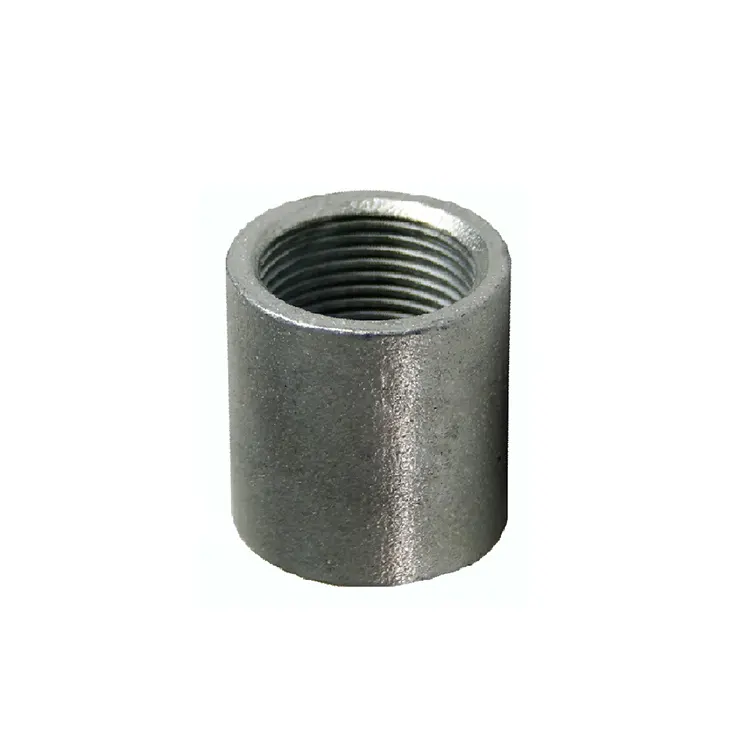
Are there Industry Standards or Certifications for Half Couplings?
Yes, there are industry standards and certifications for half couplings to ensure their quality, performance, and safety. These standards are established by various organizations to provide guidelines for manufacturers, distributors, and users of half couplings. Compliance with these standards helps maintain consistency, reliability, and compatibility within the industry. Some of the prominent standards and certifications related to half couplings include:
- ASME B16.11: The American Society of Mechanical Engineers (ASME) sets the ASME B16.11 standard for forged fittings, including socket weld and threaded half couplings. This standard covers the requirements for materials, dimensions, ratings, testing, and marking of forged fittings used in high-pressure applications.
- ASTM A105 / ASTM A182: ASTM International establishes standards for materials used in various industries. ASTM A105 covers forged carbon steel piping components, including couplings, for ambient and higher-temperature service. ASTM A182 includes specifications for forged or rolled alloy-steel pipe flanges, forged fittings, and valves and is commonly referenced for high-temperature or corrosive applications involving half couplings made from alloy steels.
- API 5CT / API 5L: The American Petroleum Institute (API) develops standards for the oil and gas industry. API 5CT specifies requirements for casing and tubing, and API 5L covers seamless and welded steel line pipe. In oil and gas applications, half couplings used for connecting casing and tubing components are expected to meet the API standards.
- ISO 9001: The International Organization for Standardization (ISO) sets the ISO 9001 standard for quality management systems. Manufacturers of half couplings can obtain ISO 9001 certification to demonstrate their commitment to consistent quality and continuous improvement in their processes and products.
- UL Listing: Underwriters Laboratories (UL) offers product testing and certification services. Half couplings used in fire protection systems or other safety-critical applications may undergo testing and receive UL listing to ensure compliance with fire safety and performance standards.
- Pressure Equipment Directive (PED): In the European Union, the Pressure Equipment Directive sets requirements for the design, manufacture, and conformity assessment of pressure equipment, including half couplings used in pressurized systems. Compliance with PED is mandatory for certain pressure equipment intended for use in the EU market.
It is essential for users and buyers of half couplings to verify that the products they purchase meet the relevant industry standards and certifications. Ensuring compliance with these standards helps assure the performance, safety, and reliability of half couplings in various applications and industries.
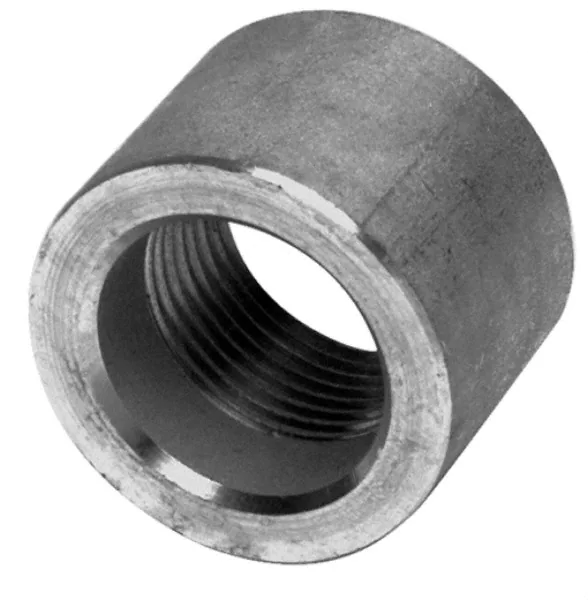
How does a Half Coupling Facilitate Pipe Connections and Disconnections?
A half coupling plays a crucial role in facilitating pipe connections and disconnections in piping and plumbing systems. It is a type of pipe fitting used to join two pipes of different sizes. Let’s explore how a half coupling enables these connections and disconnections:
- Connection Process: When two pipes of different sizes need to be connected, a half coupling is used to create a secure joint. The larger end of the half coupling is welded or screwed onto the larger pipe, providing a stable base for the connection. The internal threads on the larger end of the coupling allow for easy attachment of the smaller pipe. The smaller pipe is threaded or inserted into the smaller end of the half coupling, and the connection is tightened to ensure a snug fit. The use of thread sealant or Teflon tape helps prevent leaks at the joint.
- Transitioning Pipe Sizes: One of the primary uses of a half coupling is to transition between pipes of different sizes. For example, when a pipeline needs to change from a larger diameter to a smaller diameter, a half coupling is employed to create a smooth and efficient transition. This allows for the proper flow of fluids or gases without causing abrupt changes that could lead to pressure losses or turbulence.
- Repair and Maintenance: Half couplings are also useful during repair and maintenance operations. In case a section of the pipe is damaged or needs replacement, the damaged portion can be cut out, and a new pipe can be attached using a half coupling. This facilitates quicker and more cost-effective repairs, as it eliminates the need to replace the entire pipeline.
- Connection Points: Half couplings are often used at connection points where other components, such as valves, instruments, or equipment, need to be attached to the pipeline. By providing a secure and leak-proof joint, half couplings ensure the integrity of the overall system.
- Temporary Connections: In some situations, temporary pipe connections may be required. Half couplings are versatile enough to allow for temporary connections that can be easily disassembled when needed. This flexibility is beneficial in scenarios where pipelines need to be altered or reconfigured temporarily for maintenance or testing purposes.
In summary, a half coupling is a crucial pipe fitting that enables efficient and reliable connections between pipes of different sizes. Its versatility, ease of installation, and ability to transition between pipe sizes make it an essential component in various industrial, commercial, and residential applications. Moreover, its role in facilitating quick repairs and temporary connections further enhances its significance in piping and plumbing systems.


editor by CX 2023-12-19