
Product Description
Carbon Steel A105 B16.11 Forged Fittings 3000lb/6000lb/9000lb Socket Weld Full/Half Coupling
Product Description
1.Material: SS201, SS304/CF8, SS316/CF8M
2.Thread Ending: NPT, DIN, BSP, BSPP, BSPT etc.
3.Size: 1/8″-8″ As Customers’ Requirement
4.Pressure: 3000LBS
5.Application: Applied to stainless steel pipeline system
6.Packing: Normally Plastic PP Bag, small box, cartons and plywood cases.
| PIPE FITTINGS Coupling | |
| Production Name | SW COUPLING THREADED COUPLING |
| Size Range | DN6~DN100 NPS1/8″~4″ |
| Schedule | SCH STD, XS, XXS, SCH 10 ~ SCH 160 |
| Material Code: | |
| CARBON STEEL | ASTM A105,20#,Q235,16Mn, ASTM A350 LF1,LF2 CL1/CL2,LF3 CL1/CL2,ASTM A694 |
| F42,F46,F48,F50,F52,F56,F60,F65,F70; | |
| Incoloy 800H, Incoloy 825, Hastelloy C276, Monel 400, Monel K500 | |
| WPS 31254 S32750, UNS S32760 | |
| STHangZhouRDS | ANSI, ISO, JIS, DIN, BS,GB, SH, HG,QOST,ETC. |
| CE and certification: | ISO9001:2000 , API , BV , SGS, LOIYD |
| Applications range: | Petroleum Chemical,Refinery, Pharmacy Industry, Food & Beverage Industry, Sea Water Desalination,Paper Making, Shipbuilding Industry, Electric power, Offshore & onshore oil&gas, Mining Industry, Water Treatment, Mechanical Making, Chemical fertilizer etc. |
| Packaging: | seaworthy package,Plywood Cases or pallet or as per customers requirement |
| Quality | high lever |
| The third party inspection: | BV,SGS,LOIYD,TUV,and other party alloyed by clients. |
| Delivery Time: | At the earliest ,within the period required by customer. |
| Remark: | Also can supply IBR fittings and Specialized NACE & HIC Fittings. |
Material Data Sheet
| Grade | C ≤ | Si ≤ | Mn ≤ | P ≤ | S ≤ | Ni ≤ | Cr ≤ |
| 201 | 0.12 | 0.75 | 7.00 | 0.045 | 0.045 | 1.00-1.28 | 13.70-15.70 |
| 202 | 0.15 | 1.00 | 2.25 | 0.045 | 0.045 | 4.07-4.17 | 14.00-16.00 |
| 304 | 0.08 | 0.75 | 2.00 | 0.045 | 0.03 | 8.00-11.00 | 18.00-20.00 |
| 304L | 0.035 | 0.75 | 2.00 | 0.045 | 0.03 | 8.00-13.00 | 18.00-20.00 |
| 309 | 0.15 | 0.75 | 2.00 | 0.045 | 0.03 | 12.00-15.00 | 22.00-24.00 |
| 310S | 0.08 | 1.50 | 2.00 | 0.045 | 0.03 | 19.00-22.00 | 24.00-26.00 |
| 316 | 0.08 | 1.00 | 2.00 | 0.045 | 0.03 | 10.00-14.00 | 16.00-18.00 |
| 316L | 0.035 | 0.75 | 2.00 | 0.045 | 0.03 | 10.00-15.00 | 16.00-18.00 |
| 321 | 0.04-0.10 | 0.75 | 2.00 | 0.045 | 0.03 | 9.00-13.00 | 17.00-20.00 |
| 405 | 0.08 | 0.75 | 1.00 | 0.045 | 0.03 | 0.06 | 11.5-13.5 |
| 409 | 0.089 | 1.00 | 1.00 | 0.045 | 0.05 | 0.06 | 10.50-11.75 |
| 410 | 0.15 | 0.75 | 1.00 | 0.045 | 0.03 | 0.06 | 11.5-13.5 |
| 420 | 0.16-0.25 | 1.00 | 1.00 | 0.040 | 0.03 | 0.06 | 12.00-14.00 |
| 430 | 0.12 | 0.75 | 1.00 | 0.045 | 0.03 | 0.06 | 16.00-18.00 |
| 904L | 0.02 | 1.0 | 2.00 | 0.045 | 0.03 | 23.00-28.00 | 19.00-23.00 |
Detailed Photos
| Model NO. | DN6~DN200 NPS1/8″~8″ |
| Certification | ASME, ANSI, JIS, GB, API |
| Certificate | ISO9001 |
| Trademark | ST |
| Package | Pallet, Wooden Case |
| Specification | API, ISO |
| Origin | HangZhou, China |
Packaging & Shipping
Package:
1. Packed by plywood case or plywood pallet
2. we will put packing list on each package
3. we will put shipping markings on each package. Markings words are on your request.
4. All wood package materials are fumigation free
Certifications
Company Profile
Established in 1989, ZheJiang CHINAMFG Pipe Fitting Group Co.,Ltd covering an area of 100,000 square meters, with a workshop of 25,000 square CHINAMFG and registered capital of $7,500,000.
Over 380 employees, including over 90 professionals and technicians,we are a strong team built up of heart
Main Products: elbows, tees, bends, reducers, caps exported to many countries and regions in Southeast Asia, the Middle East, Europe and America
With 30 years’ experience, our products enjoy a good reputation in domestic and foreign markets. Every year, hundreds of foreign visitors and innumerable domestic visitors come here to visit.
Equipped with first-class inspection devices, perfect detecting means and well-trained specialists, stick to ISO9000 quality system and efficiently control procedure in production.
Competitive price, Best service to you to satisfy customers and help partners succeed.
Equipped with 8,000 tons of four-column press, 1600 tons of push-machine, 800 tons of large-scale pipe bending machine, 8 tons of forging hammer and other production equipment in total more than 120 sets.
All kinds of certificates to ensure a best quality and service for project for you.
Our Advantages
1. Dimension measurements, all within standard tolerance.
2. Thickness tolerance:+/-12.5% , or on your request
3. PMI
4. MT, UT,X-ray test
5. Accept Third party inspection
6. Supply MTC, EN15714 3.1/3.2 certificate
After Sales Service
Production Period
We have rich experience in organizing the production and logistic, which could help us to cut the production period and ensure the supplying, so that we could meet customers’ urgent demand. Besides, our timely supplying can also help customer to reduce the planned stocks reserve.
Quality Control
Quality control begins from selecting the qualified raw material supplier, then each lot of raw material must be re-tested at random when enter the material inventory.Then from the raw material cutting process, shaping, heat treatment, machining,surface treatment, packaging, all these process quality control is necessary.
FAQ
| Q: Can you supply Form e, Certificate of origin? |
| A: Yes, we can supply. |
| Q: Can you supply invoice and CO with chamber of commerce? |
| A: Yes, we can supply. |
| Q: Can you accept L/C deferred 30, 60, 90days? |
| A: We can. |
| Q: Can you accept O/A payment? |
| A: We can. |
| Q: Can you supply samples? |
| A: Yes, some samples are free. |
| Q: Can you supply the products which comply with NACE? |
| A: Yes, we can. |
| Q: Can you visit your factory |
| A: Yes, sure. Welcome. |
| Q: Can you inspect the goods before delivery |
| A: Yes, sure. Welcome to our factory inspect the goods. Also accept third party inspection, such as SGS, TUV, BV etc. |
| Q: Can you supply MTC , EN15714 3.1/3.2 certificate? |
| A: Yes, sure. we can |
| Q: Do you have ISO |
| A: Yes, we have |
| Q: Can you accept OEM? |
| A: Yes, we can |
| Q: Can you accept marking our LOGO? |
| A: Yes, we can |
| Q: What is your MOQ? |
| A: 1pcs for standard fittings and flanges. |
| Q: Can you support to design our piping system? |
| A: Yes, we would like to your partner and our engineer will help. |
| Q: Can you offer data sheet and drawing? |
| A: Yes, we can |
| Q: Can you ship by carrier or airline? |
| A: Yes, we can. And we also can ship by train |
| Q: Can you combine your order with other supplier? Then ship together? |
| A: Yes, we can. We would like help you ship together to save your time and money |
| Q: Can you shorten delivery time? |
| A: If very very urgent, please confirm with sales. We would like arrange extra-working time for you. |
| Q: Can you marking on package as per IPPC? |
| A: Yes, we can |
| Q: Can you mark “MADE IN CHINA” on products and packing? |
| A: Yes, we can |
| Q: Can you supply semi-finished products? |
| A: Yes, we can |
| Q: We need some test sample pieces for each heat number, Can you supply? |
| A: Yes, we can |
| Q: Can you supply heat treatment report? |
| A: Yes, we can |
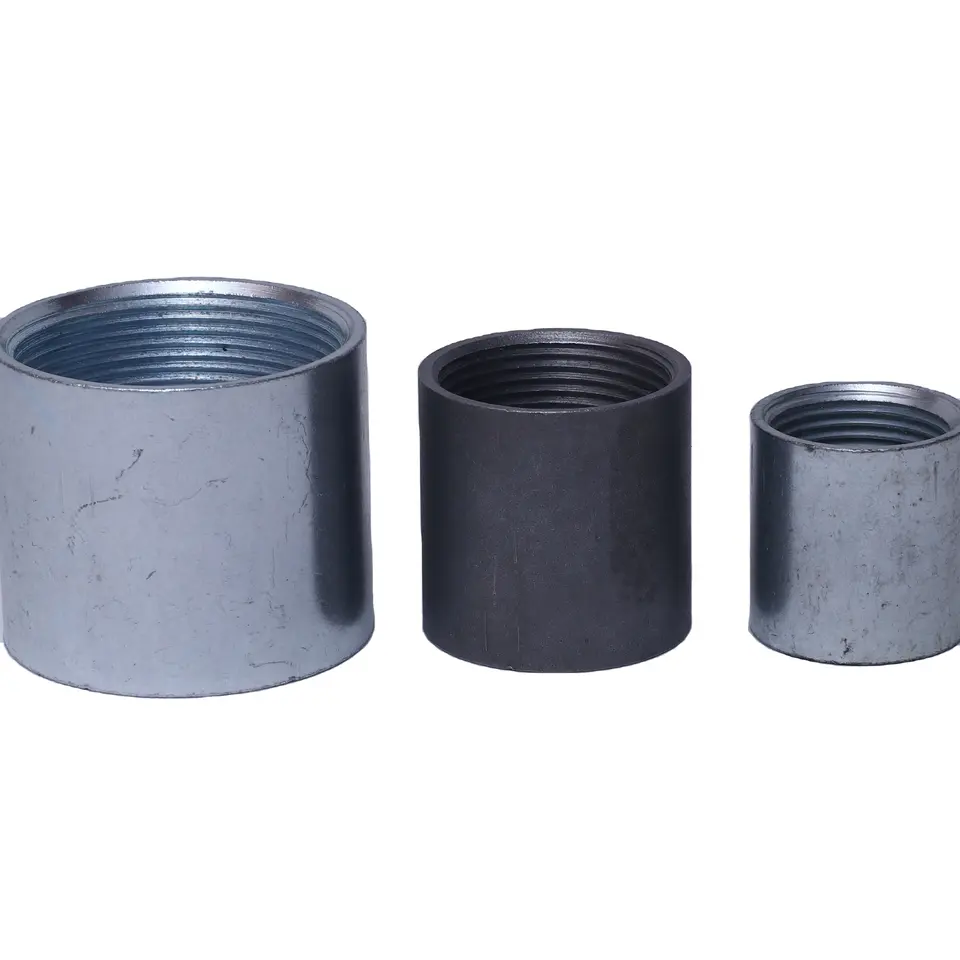
What are the Signs of Wear, Corrosion, or Damage in a Half Coupling?
A half coupling, like any other pipe fitting, can experience wear, corrosion, or damage over time due to various factors. Regular inspection is crucial to detect any issues early on and prevent potential leaks or failures in piping and plumbing systems. Here are some signs to look for to identify wear, corrosion, or damage in a half coupling:
- Visible Corrosion: Check for any signs of rust or corrosion on the surface of the half coupling. Corrosion can weaken the material and lead to leaks or structural failure. Surface discoloration, rough patches, or flaking of the metal are all indicators of possible corrosion.
- Thread Damage: For threaded half couplings, inspect the threads carefully. Look for signs of stripping, galling, or deformation. Damaged threads can compromise the integrity of the connection and may result in leaks.
- Cracks or Fractures: Examine the half coupling for any cracks, fractures, or signs of deformation. Cracks can lead to leaks and should be addressed immediately to prevent further damage.
- Worn Socket or Weld Seam: In the case of socket weld or butt weld half couplings, inspect the socket or weld seam for signs of wear or damage. A worn socket may not provide a secure fit for the smaller pipe, while defects in the weld can compromise the joint’s strength and integrity.
- Leaks: Any visible leaks or indications of moisture around the joint or coupling are clear signs of a problem. Leaks can be caused by damaged threads, corroded surfaces, or improper installation.
- Reduced Performance: If the system’s performance declines, such as a decrease in flow rate or pressure, it could be a sign of a partially obstructed or damaged coupling.
- Age and Service Life: Consider the age and service life of the half coupling. Over time, even well-maintained couplings may show signs of wear and fatigue, warranting closer inspection.
If any of these signs are observed, it is essential to take prompt action to address the issues. Depending on the severity of the wear, corrosion, or damage, the appropriate steps may include repairing or replacing the half coupling. In some cases, it may be necessary to inspect adjacent pipes and components for possible effects of the compromised coupling.
Regular maintenance and inspection practices can help identify signs of wear, corrosion, or damage in a half coupling before they escalate into more significant problems. Following manufacturer’s guidelines, adhering to industry standards, and using suitable materials for the application can contribute to the longevity and reliability of the half coupling and the entire piping or plumbing system.
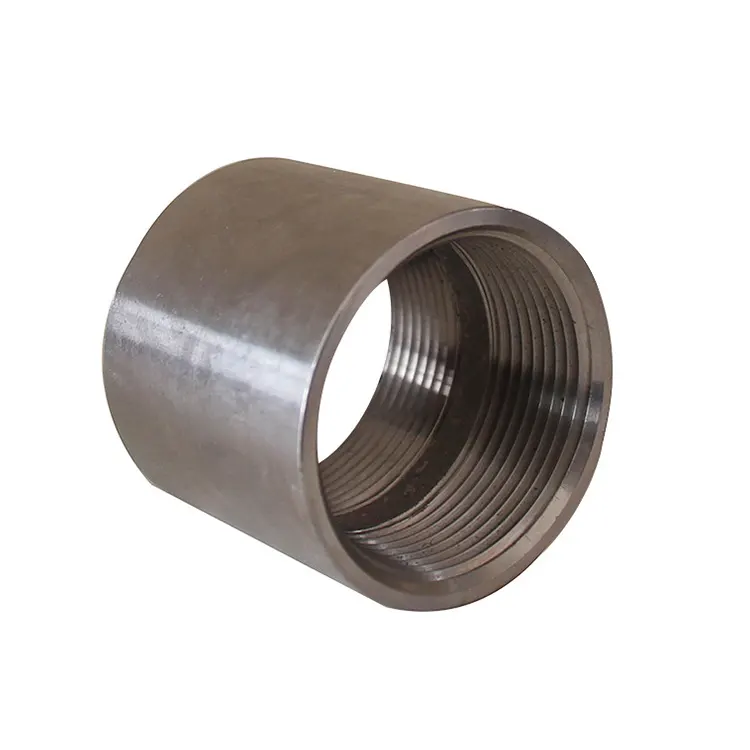
How do you Select the Right Half Coupling Material Based on the Fluid or Gas being Conveyed?
Choosing the appropriate material for half couplings is essential to ensure their compatibility with the fluid or gas being conveyed. The selection process involves considering several factors related to the nature of the conveyed substance and the specific operating conditions. Here’s a step-by-step guide on how to select the right half coupling material:
- Identify the Conveyed Fluid or Gas: Determine the type of fluid or gas that will flow through the piping system. Different materials may be required depending on whether the conveyed substance is water, oil, gas, chemicals, steam, or any other medium.
- Consider the Chemical Compatibility: Evaluate the chemical properties of the conveyed substance. Some fluids or gases can be corrosive or reactive with certain materials. Look for half coupling materials that are chemically resistant to the specific medium to prevent degradation or premature failure.
- Assess the Temperature and Pressure: Take into account the operating temperature and pressure of the system. High-temperature fluids or gases may require materials with excellent heat resistance, while high-pressure applications demand strong and durable coupling materials that can withstand the stress.
- Check for Abrasion or Erosion: In systems where the conveyed substance contains solid particles or abrasive materials, consider half coupling materials with good wear resistance to prevent premature wear and damage to the coupling surface.
- Verify Material Standards: Ensure that the selected half coupling material complies with relevant industry standards such as ASTM, ASME, API, or ISO. These standards define the material’s properties and performance criteria, providing a reliable benchmark for quality and suitability.
- Consider Environmental Conditions: Evaluate the environmental factors that can affect the coupling’s performance, such as humidity, UV exposure, or exposure to harsh chemicals. Choose materials with appropriate coatings or properties to withstand the specific environmental conditions.
- Factor in Cost and Availability: Balancing performance requirements with cost considerations is essential. Select a half coupling material that meets the necessary performance criteria while fitting within the project’s budget. Additionally, ensure that the chosen material is readily available for procurement.
Common materials used for half couplings include carbon steel, stainless steel, alloy steel, brass, bronze, and various plastics such as PVC, CPVC, and PTFE. Each material has its advantages and limitations, making the selection process critical for a successful and reliable piping system.
By carefully considering the conveyed fluid or gas, chemical compatibility, temperature, pressure, abrasion resistance, and other relevant factors, you can make an informed decision and select the right half coupling material that will ensure a safe and efficient operation of the piping system.
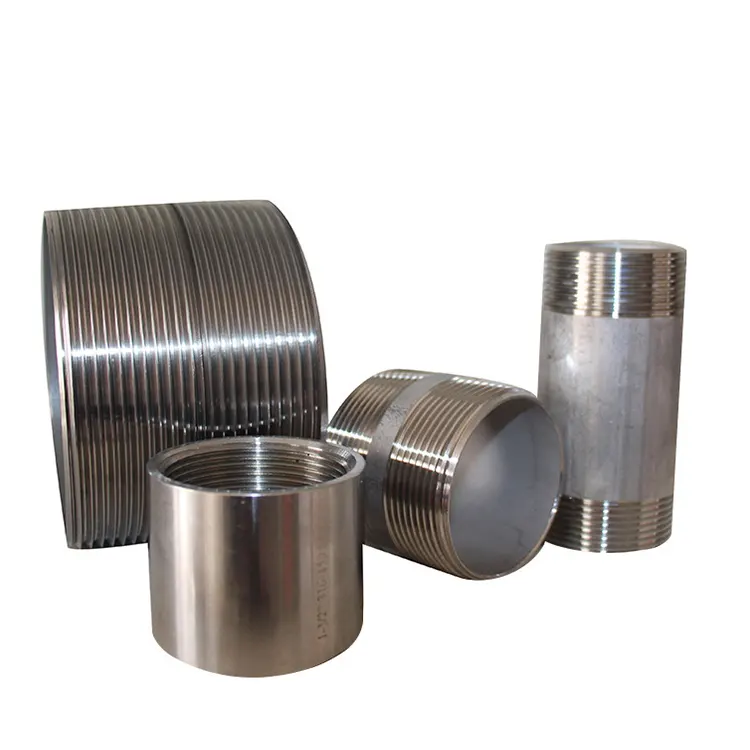
Can a Half Coupling be Used to Join Pipes of Different Diameters?
Yes, a half coupling can be used to join pipes of different diameters in piping and plumbing systems. Half couplings are specifically designed to connect two pipes of different sizes, making them ideal for creating transitions or connections between pipes with varying diameters. The larger end of the half coupling is welded or screwed onto the larger diameter pipe, providing a stable base for the connection. The smaller pipe, which has a different diameter, is then threaded or inserted into the smaller end of the half coupling.
The ability to join pipes of different diameters is one of the main advantages of using half couplings. This feature allows for efficient and smooth transitions between pipe sizes, which is crucial in maintaining proper fluid flow, reducing pressure losses, and preventing turbulence within the system.
Here are some common scenarios where half couplings are used to join pipes of different diameters:
- Reducing Pipe Size: When a pipeline needs to change from a larger diameter to a smaller diameter, a half coupling can be employed to create a smooth transition. For example, if a process requires a reduction in flow rate, a smaller pipe can be connected to the main pipeline using a half coupling.
- Connecting Equipment or Valves: In many industrial applications, equipment, valves, or instruments are connected to the main pipeline using half couplings. Often, these components have different pipe sizes than the main pipeline, and a half coupling provides a secure and leak-proof joint.
- Repair and Maintenance: During repair or maintenance operations, a damaged section of the pipeline can be cut out, and a new pipe of a different diameter can be connected using a half coupling. This allows for quick repairs without having to replace the entire pipeline.
When using a half coupling to join pipes of different diameters, it is essential to ensure that the threads and dimensions of the coupling match the pipes being connected. Proper sealing techniques, such as using thread sealant or Teflon tape, should also be applied to prevent leaks and ensure a reliable connection.
In conclusion, half couplings are versatile pipe fittings that enable the joining of pipes with different diameters. Their ability to facilitate smooth transitions and secure connections makes them invaluable in various industrial, commercial, and residential applications.


editor by CX 2023-11-28