
Product Description
Steel Nipples
Cabon Steel and Stainless Steel
Black and Galvanized
Close Nipple, Short Nipple, Shoulder nipple, Long Nipple, Running Nipple, Barrel Nipple etc
Product Details:
| Type: Close Nipple, Short Nipple, Shoulder nipple, Long Nipple, Running Nipple, Barrel Nipple etc |
| Type of pipe: Welded or Seamless pipe |
| Size: 1/8″ to 8″ |
| Length: 3/4″-24″; 19mm-500mm; Or as per customer’s request |
| Thickness: SCH40, SCH80, SCH160; CLASS A, CLASS B, CLASS C |
| Material: Carbon steel; Stainless steel: 304/304L/316/316L/321 |
| Standard: American Standard: ASTM A733 / PIPE: ASTM A53 / ASTM A106 / THREADS: ANSI B1.20.1 British Standard: BS EN15711 / PIPE: BS1387 / THREADS: ISO 7/1 DIN Standard: DIN2982 / PIPE: DIN2440 / THREADS: DIN2999 |
| Surface treatment: Black, Hot galvanized, Electro galvanized |
| Packing: Packed in cartons, then on pallet |
| Min Order Quantity: According to customer’s requirement |
| Delivery Time: 25 days after order conformed |
| Payment: By T/T or L/C |
| Applications range:1) Petroleum, chemical industry, water conversancy, electric power, Natural gas, Coal gas, Water power and other pipeline projects. 2) Industrial pipeline system on shipping, mine, oil field, textile, powder plant etc 3) Pipeline system on subway station, railway station, airport, seaport, bridge etc |
/* March 10, 2571 17:59:20 */!function(){function s(e,r){var a,o={};try{e&&e.split(“,”).forEach(function(e,t){e&&(a=e.match(/(.*?):(.*)$/))&&1
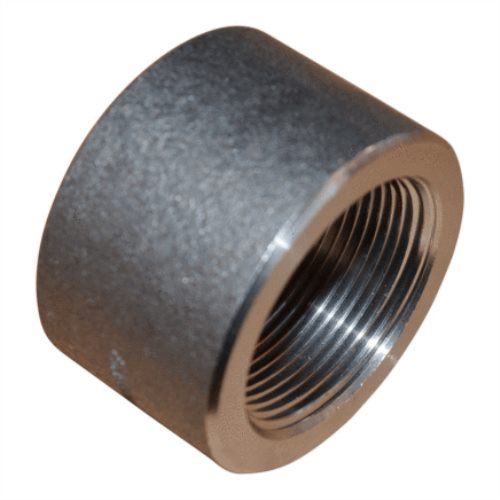
Can a Half Coupling be Used for Both Temporary and Permanent Pipe Connections?
Yes, a half coupling can be used for both temporary and permanent pipe connections, depending on the specific requirements of the application and the type of half coupling used.
Temporary Pipe Connections: Threaded half couplings are commonly used for temporary pipe connections. They allow for easy assembly and disassembly of the pipes without the need for welding. Threaded couplings offer quick installation and are ideal for situations where frequent changes or maintenance are necessary. For example, during construction or testing phases, temporary pipe connections may be required before the final system configuration is established.
Permanent Pipe Connections: Socket weld and butt weld half couplings are primarily used for permanent pipe connections. Once these couplings are welded to the pipes, the joint becomes integral, robust, and permanent. Socket weld couplings are commonly used in smaller diameter pipes, while butt weld couplings are more prevalent in larger diameter pipes and high-pressure applications. These types of couplings are well-suited for applications where a secure and leak-proof connection is essential for the long-term operation of the system.
It is essential to choose the appropriate type of half coupling based on the specific needs of the application. Consider factors such as the system’s operating conditions, pressure requirements, maintenance frequency, and future changes or expansions. Temporary connections using threaded half couplings provide flexibility and ease of maintenance but may not be suitable for high-pressure or critical systems. On the other hand, permanent connections using socket weld or butt weld half couplings offer maximum strength and reliability, but they require careful planning and welding expertise.
In some cases, half couplings may be used temporarily during system assembly or testing and later replaced with socket weld or butt weld couplings for permanent operation. This allows for easier adjustments during the initial setup while ensuring a durable connection in the long run.
Ultimately, the choice between temporary and permanent pipe connections using half couplings depends on the specific requirements of the project and the balance between flexibility and long-term reliability.
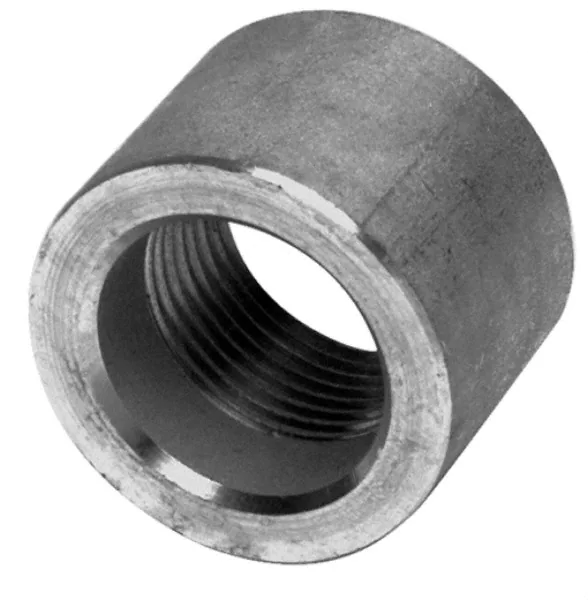
What are the Differences Between Half Couplings and Full Couplings in Pipe Fittings?
In pipe fittings, both half couplings and full couplings serve the purpose of joining two pipes together, but they differ in their design and applications. Here are the key differences between half couplings and full couplings:
- Design: The main difference lies in their design. A half coupling has one end with internal threads or a socket, allowing it to be connected to a threaded pipe or inserted into the end of a pipe without threading. The other end of the half coupling is an open end, ready to be welded or threaded to another pipe. On the other hand, a full coupling has both ends with female threads, enabling it to connect two threaded pipes directly without the need for welding.
- Function: Half couplings are commonly used to create a joint between a pipe and a component such as a valve, pump, or pressure gauge. The open end of the half coupling facilitates easy attachment to the component, while the threaded or socketed end connects to the pipe. On the other hand, full couplings are used when a direct, rigid connection between two pipes is needed, providing a continuous flow path without any interruptions.
- Application: Half couplings are frequently used in situations where frequent disassembly or maintenance may be required. For example, in systems with valves that need periodic inspection or replacement, a half coupling allows for easy removal without disturbing the entire pipeline. Full couplings, on the other hand, are more suitable for applications where a permanent, leak-proof connection is needed, such as in pressurized systems or critical process pipelines.
- Length: Full couplings are typically longer than half couplings because they need to accommodate two threaded ends, while half couplings have one threaded or socketed end and an open end, making them shorter in length.
- Installation: The installation process differs for half and full couplings. Half couplings are welded or threaded onto one pipe end and then connected to another pipe or component using welding or threading, respectively. Full couplings, on the other hand, directly join two pipes with threaded ends, requiring no additional welding or threading.
- Flexibility: Half couplings offer more flexibility due to their ability to connect to different types of components or pipes with varying end connections. Full couplings are less flexible in this regard, as they can only join two threaded pipes together.
Overall, the choice between half couplings and full couplings depends on the specific requirements of the piping system, including the need for temporary connections, the type of components being attached, the nature of the fluid being transported, and the desired level of joint permanence and flexibility.
What are the Different Materials Commonly Used for Manufacturing Half Couplings?
Half couplings are pipe fittings used in piping and plumbing systems to connect two pipes of different sizes. They are available in various materials, each offering unique properties suitable for different applications. Some of the commonly used materials for manufacturing half couplings include:
- Stainless Steel: Stainless steel half couplings are popular due to their excellent corrosion resistance, high strength, and durability. They are ideal for applications involving aggressive or corrosive media and are commonly used in industries such as chemical processing, oil and gas, and food processing.
- Carbon Steel: Carbon steel half couplings are known for their high tensile strength and affordability. They are widely used in industrial applications where the fluid being transported is not corrosive. Carbon steel couplings are commonly used in water supply systems, heating, and ventilation systems.
- Brass: Brass half couplings are valued for their resistance to dezincification and corrosion. They are often used in plumbing systems, particularly for connecting copper pipes. Brass couplings find applications in water supply lines, plumbing fixtures, and other potable water-related applications.
- Copper: Copper half couplings are commonly used in plumbing systems and HVAC (heating, ventilation, and air conditioning) applications. Copper is known for its excellent thermal conductivity and antimicrobial properties, making it suitable for applications where heat transfer and cleanliness are crucial.
- Aluminum: Aluminum half couplings are lightweight and corrosion-resistant, making them suitable for specific industrial and marine applications. They are often used in the transport of certain chemicals and in offshore installations.
- Bronze: Bronze half couplings are known for their strength and resistance to corrosion and wear. They find applications in marine environments, particularly for seawater piping systems, as well as in some oil and gas applications.
The choice of material for half couplings depends on various factors such as the nature of the fluid being transported, the operating conditions, the required strength, and the budget constraints. Proper material selection is essential to ensure the longevity and efficiency of the piping or plumbing system.


editor by CX 2024-01-16