
Product Description
Hose Coupling With Lock And Collar Guillemin Symmetrical Half Coupling
The standard of Guillemin Coupling is EN14420-8 or NF E29572. Materials are mainly stainless steel, aluminum, polypropylene and brass. Guillemin hose couplings is connected with thread and locking ring (latch). It can be used with DIN2817 safety clamp. Working pressure is 10 bar. Guillemin coupling is widely used in industries of oil, chemical, fire protection, paper manufacture, construction and metallurgy.
Guillemin couplings, also referred to as French couplings are symmetrical couplings where to identical halves are assembled by joining the lugs and turning the locking ring to ensure a good connection.
Pros:
Simple and easy connection
Has a locking ring and soft seal
Large free flow area
Aluminum couplings are lighter in weight than stainless steel
Suitable for water, fluids, hydrocarbons, chemicals, and dry loose materials
| Product Name: | Guillemin Camlock Coupling |
| Sizes: | 1” – 4” (DN25-DN100) |
| MOQ: | 50 pcs |
| Certificates: | CE, ISO9001:2015 |
| Standard: | EN14420-8 /NF E29572 |
| Material: | Stainless steel 316/ 304, Aluminum, PP |
| Working pressure: | 10 bar |
| Feature: | Light, flexible and interchangeable. To connect and disconnect without a tool. Economical |
| Application: | it is widely used in oil, chemical industry, fire fighting, paper manufacture, constructoin and metallurgy |
| HS code: | 7609000000 |
Our Advantage
We are experienced as we have been in this industry as a manufacturer for more than 10 years. Both of quality and service are highly guaranteed. Absolutely prompt delivery. We can produce according to specific drawings from customers. Welcome OEM/ODM project. Strict control on quality. High efficient and well trained sale service team. ISO9001, CE and SGS certified.
FAQ
1.Q: Are you a producer or trading company?
A: We are an experienced manufacturer. We own production line and kinds of machines.
2.Q: Can you make our specific logo on the part?
A: Yes please provide me your logo and we will make your logo on the part.
3.Q: Can you manufacture products according to my drawings?
A: Yes we can manufacturer according to client’s drawings if drawings or samples are available. We are experienced enough to make new tools.
4. Q: Can I get some samples?
A: We are honored to offer you our samples. Normally it is for free like 3-5 pcs. It is charged if the samples are more than 5 pcs. Clients bear the freight cost.
5. Q: How many days do you need to finish an order?
A: Normally it takes about 30 days to finish the order. It takes more time around CHINAMFG season, or if the order involves many kinds of different products.
6. Q: What kind of rubber washer do you apply to camlock couplings?
A: Normally we use NBR gasket.
contact-info.html /* March 10, 2571 17:59:20 */!function(){function s(e,r){var a,o={};try{e&&e.split(“,”).forEach(function(e,t){e&&(a=e.match(/(.*?):(.*)$/))&&1

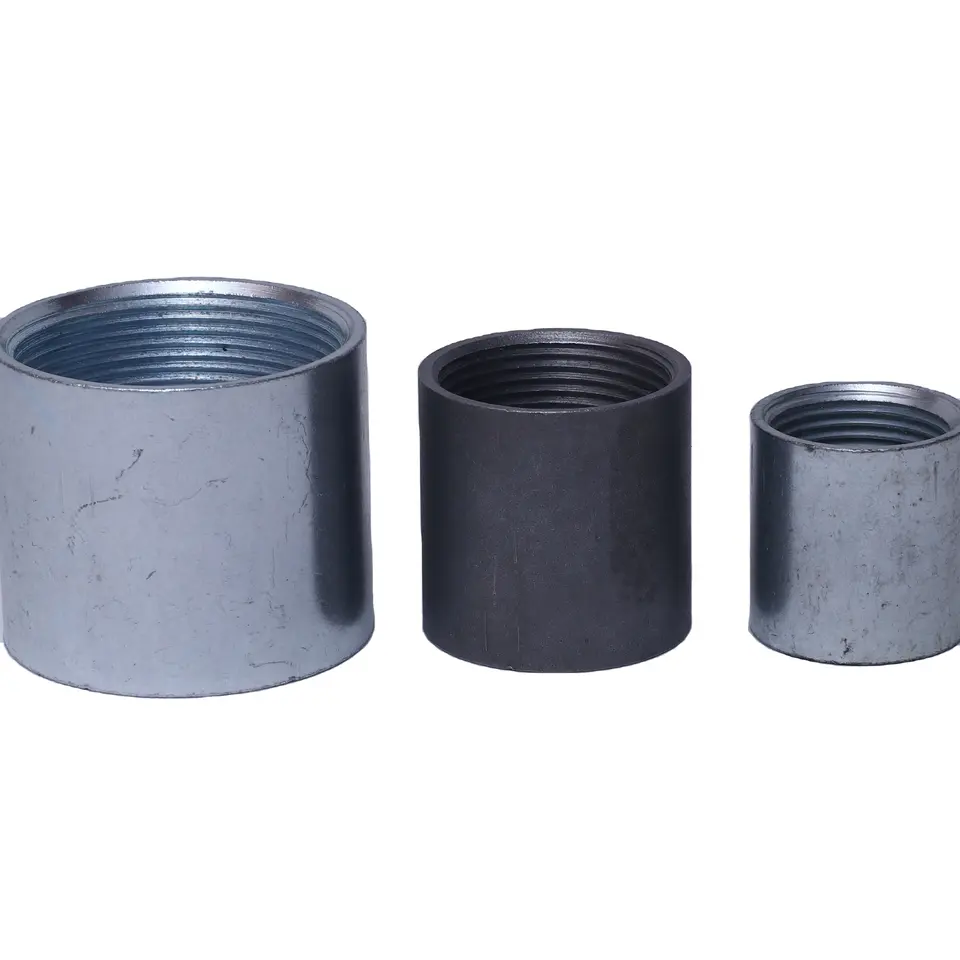
How do you Properly Install and Secure a Half Coupling to Ensure a Leak-Free Connection?
Properly installing and securing a half coupling is essential to ensure a leak-free and reliable connection in piping and plumbing systems. Follow these steps to achieve a secure joint:
- Cut and Prepare the Pipe: Start by cutting the larger pipe to the desired length, ensuring a clean and even edge. Use a deburring tool or file to remove any sharp edges or burrs that could interfere with the coupling’s sealing surface.
- Check Threads and Fit: For threaded half couplings, inspect the internal threads of the coupling and the external threads of the pipe. Make sure they are clean and free from debris or damage. Ensure that the threads match and fit properly, as any misalignment can lead to leaks.
- Apply Thread Sealant: Before attaching the half coupling, apply a suitable thread sealant, such as Teflon tape or pipe dope, to the male threads of the pipe. The sealant helps prevent leaks by filling any gaps or imperfections in the threads.
- Attach the Half Coupling: Thread the half coupling onto the pipe’s male threads carefully. Use a wrench to ensure a snug fit, but avoid over-tightening, as it may damage the threads or cause stress on the joint.
- For Socket Weld or Butt Weld Couplings: For socket weld half couplings, insert the smaller pipe into the coupling’s socket and align it properly. For butt weld half couplings, weld the coupling to the larger pipe’s end with proper welding techniques and safety measures. Follow industry standards for welding procedures and ensure a smooth and consistent weld for a leak-free joint.
- Check for Leaks: After installation, perform a leak test to ensure the joint is secure. Apply a pressure test or use a suitable leak-detection method to verify the connection’s integrity. If any leaks are detected, disassemble the joint, inspect for issues, and reassemble following the proper steps.
- Consider Thermal Expansion: In applications with temperature variations, consider the thermal expansion and contraction of the pipes. Provide sufficient flexibility in the system to accommodate these changes and prevent stress on the joints, which could lead to leaks over time.
- Follow Manufacturer’s Instructions: Always follow the manufacturer’s instructions and recommendations for the specific type and material of the half coupling being used. Different couplings may have unique installation requirements and torque specifications.
Proper installation and securing of a half coupling are crucial for maintaining the integrity of the piping or plumbing system and ensuring a leak-free connection. Following these steps and adhering to industry standards will help achieve a reliable and durable joint.
How do you Calculate the Required Size and Specifications for a Half Coupling?
Calculating the required size and specifications for a half coupling involves considering several factors related to the piping system and the intended application. Here’s a step-by-step guide on how to calculate the size and specifications:
- Identify the Pipe Size: Determine the size of the pipe to which the half coupling will be connected. The pipe size is usually specified in inches and represents the nominal diameter of the pipe.
- Consider the Pipe Material: Know the material of the pipe, such as carbon steel, stainless steel, PVC, copper, or others. The half coupling material should be compatible with the pipe material to avoid any galvanic corrosion or other issues.
- Assess the Operating Pressure: Determine the maximum operating pressure of the system in which the half coupling will be used. The half coupling should have a pressure rating that exceeds the maximum operating pressure to ensure safety and reliability.
- Calculate the Torque Requirements: For threaded half couplings, calculate the required torque for proper thread engagement. The torque calculation involves considering the thread pitch, thread diameter, and the material of the pipe and coupling.
- Check the Temperature Range: Evaluate the temperature range in which the half coupling will be operating. Ensure that the material chosen can withstand the maximum and minimum temperatures of the system without any adverse effects.
- Account for Environmental Factors: Consider any environmental factors that may affect the half coupling’s performance, such as exposure to chemicals, UV radiation, or extreme weather conditions. Select a material and coating, if necessary, to protect the coupling from environmental degradation.
- Verify Compliance with Standards: Ensure that the selected half coupling meets relevant industry standards and specifications, such as ASME, ASTM, API, or ISO, to guarantee its quality and performance.
- Factor in the Application: Consider the specific application of the half coupling, such as its use in a water supply system, chemical process, high-pressure pipeline, or industrial equipment. The application requirements will influence the material selection, pressure rating, and other specifications.
- Consult with Experts: If unsure about the calculations or specifications, consult with piping system experts or engineers who can provide guidance and ensure the proper selection of the half coupling based on the system’s requirements.
By following these steps and carefully considering the pipe size, material, pressure, torque, temperature, environmental conditions, compliance with standards, application, and seeking expert advice when needed, you can accurately calculate the required size and specifications for a half coupling that will perform optimally in the piping system.
What is a Half Coupling and How is it Used in Piping and Plumbing Systems?
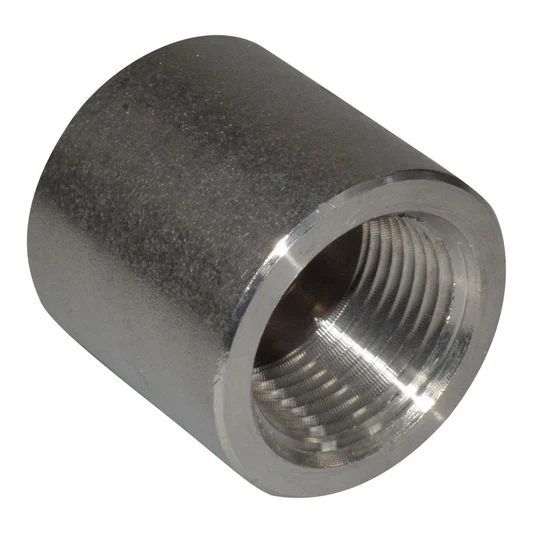
A half coupling is a type of pipe fitting used in piping and plumbing systems to connect two pipes of different sizes. It is a short, threaded piece with one end designed to be welded or screwed onto a larger pipe, and the other end allows for the attachment of a smaller pipe. The half coupling has internal threads on one end and a plain or beveled surface on the other end.
Half couplings are typically made from materials such as stainless steel, carbon steel, brass, or other suitable alloys, depending on the application and the medium being transported through the pipes.
In piping systems, half couplings are used for various purposes:
- Reducing Pipe Size: One common use of half couplings is to reduce the pipe size at a specific point in the system. For example, when a large pipe needs to be connected to a smaller pipe, a half coupling can be employed to create a smooth transition.
- Connection Points: Half couplings are often used at connection points where equipment, valves, or instruments are attached to the pipeline. They provide a secure and leak-proof joint.
- Repair and Maintenance: In the event of a pipe section damage, a half coupling can be used to cut out the damaged portion and replace it with a new pipe, facilitating quick repairs without the need to replace the entire pipeline.
The installation of a half coupling involves a few simple steps:
- Cutting and Preparing the Pipe: The larger pipe, to which the half coupling will be attached, is cut to the desired length, and the edge is cleaned and beveled to ensure a proper welding or threading joint.
- Attaching the Half Coupling: The half coupling is then welded or screwed onto the larger pipe end. For welding, proper welding techniques and safety measures must be followed to achieve a strong, reliable joint.
- Connecting the Smaller Pipe: The smaller pipe is threaded or inserted into the other end of the half coupling. The connection is tightened to ensure a secure fit, and sealing materials like Teflon tape or thread sealant may be used to prevent leaks.
In plumbing systems, half couplings serve similar functions, connecting different pipes or fixtures of various sizes. The installation process may vary slightly, depending on the type of plumbing materials and the specific application.
In summary, half couplings are essential components in piping and plumbing systems, enabling the connection of pipes with different diameters and facilitating repairs or adding connection points with ease and efficiency.


editor by CX 2024-02-06