
Product Description
Forged Steel Pipe Fitting:(Socket Weld Forged Pipe Fittings andThreaded Forged Steel Pipe Fittings)are machined from CHINAMFG forgings. The quality of the fittings is critical in that they are designed to withstand higher pressures. In designing forged fitting, the most important factors are: uniformity of wall, wide bands, sharp threads properly chamfered and unrestricted flow.
Product Details
| 1. Forged Fittings Type: Elbow, cross, street elbow, tee, coupling, half coupling, cap, plug, bushing, union, outlet, sage nipple, bull plug, reducer insert, pipe nipple etc. |
| 2. Connection: Socket Welded(male or female), Threaded |
| 3. Size Range: 1/8″ – 4″(6mm – 100mm) |
| 4. Pressure Rating: Threaded Forged Pipe Fittings: 2000LBS, 3000LBS, 6000LBS Socket welding Wog 3000, 6000, 9000 LBS |
| 5. Specifications: 1) Standard: ASME B 16.11, MSS-SP-79\ 83\ 95\97 2) Material:Carbon steel: ASTM A105/A694 F42/ 46/52/56/60/65/70/A350 LF3/A350 LF2 Stainless steel: ASTM A182 F304/ F304/ F316/F316L/F317/ 317L/ F321/ F310/ 347/ 904 3) Size of raw material: Dia. 19-85mm round bar. |
| 6. Technology: Forged |
| 7. Packing: Wooden cases or wooden pallet or as per customers requirement |
| 8. Delivery Time: 25 days after order conformed |
| 9. Payment: By T/T or L/C |
| 10. Applications range: Petroleum, chemical, machinery, electric power, shipbuilding, Papermaking, construction etc |
Packaging & Shipping
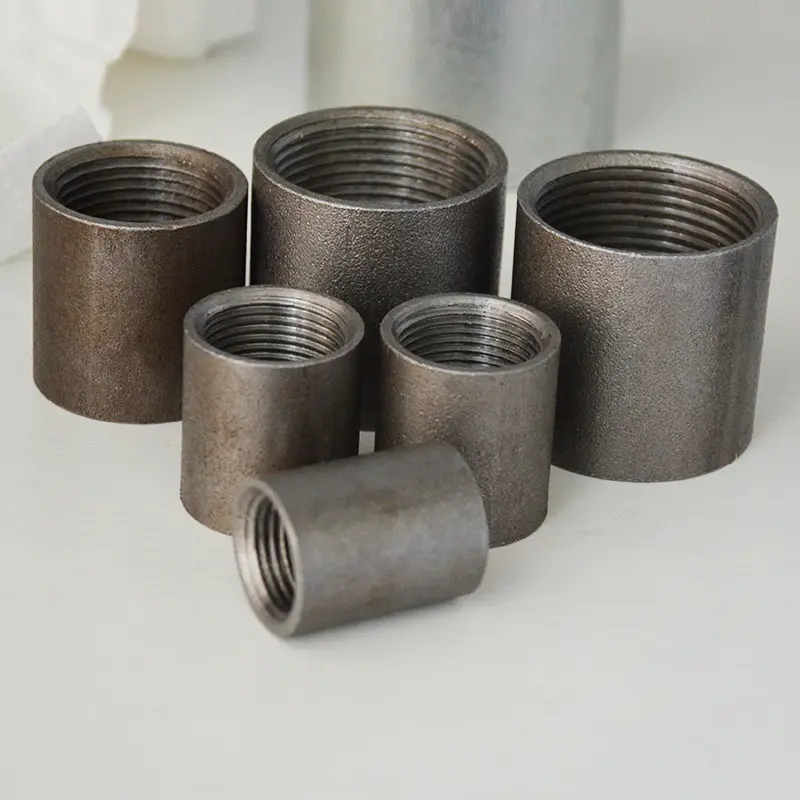
Can a Half Coupling be Threaded or Welded onto Pipes?
Yes, a half coupling can be both threaded and welded onto pipes in piping and plumbing systems. The method of attachment depends on the type of half coupling and the specific application requirements.
Threaded Half Coupling: Threaded half couplings have internal threads on one end, allowing for easy connection to pipes with matching external threads. To install a threaded half coupling, the larger end with internal threads is screwed onto the male threads of the larger diameter pipe. The smaller pipe is then threaded into the other end of the half coupling, creating a secure and leak-proof joint. Threaded half couplings are commonly used when frequent disassembly may be required or when connecting components like valves or instruments to the pipeline.
Socket Weld Half Coupling: Socket weld half couplings have a socket on one end, which allows for the insertion of the pipe without threading. The joint is then welded for a strong and permanent connection. The larger diameter pipe is inserted into the socket, and a fillet weld is applied around the outside of the coupling to secure the smaller pipe. Socket weld half couplings are often used in high-pressure applications and systems that require a robust and reliable connection.
Butt Weld Half Coupling: Butt weld half couplings are designed for butt welding, which involves welding the coupling directly to the larger pipe end. The smaller pipe is inserted into the other end of the half coupling, and a butt weld is applied to secure the joint. Butt weld half couplings are commonly used in critical applications where a smooth and continuous inner surface is required to prevent turbulence and pressure losses.
The choice between threaded and welded half couplings depends on factors such as the operating conditions, the type of fluid being transported, and the required joint strength. Threaded half couplings offer ease of installation and disassembly, making them suitable for applications where frequent maintenance is needed. On the other hand, socket weld and butt weld half couplings provide permanent and strong connections, making them suitable for high-pressure and critical systems.
Regardless of the method of attachment, it is essential to ensure proper installation and adherence to industry standards to achieve a secure and leak-free connection. Regular inspection and maintenance of the half couplings and the entire piping system are also necessary to detect any signs of wear, corrosion, or damage and address them promptly.
What are some Real-World Examples of Half Coupling Usage in Different Industries?
Half couplings are widely used in various industries to create reliable connections between pipes and components. Here are some real-world examples of half coupling usage in different industries:
- Oil and Gas Industry: In the oil and gas sector, half couplings are commonly used in pipelines for crude oil, natural gas, and refined products transportation. They are also employed in offshore platforms, refineries, and petrochemical plants to connect pipes and fittings in high-pressure and corrosive environments.
- Chemical Processing: The chemical industry utilizes half couplings to connect pipes carrying various chemicals and corrosive substances. The coupling’s resistance to corrosion is vital to ensure the integrity of the piping system in these applications.
- Power Generation: In power plants, half couplings are employed in steam and water pipelines, allowing efficient transfer of heat and fluids in boilers and condensers. They are also used in cooling water systems and various auxiliary processes.
- Food and Beverage: In food processing facilities, stainless steel half couplings are widely used due to their hygienic properties. They help connect pipes in systems for handling water, beverages, dairy products, and other food items, ensuring sanitation and preventing contamination.
- Marine Industry: Half couplings are used in shipbuilding and offshore structures to create connections in piping systems for various applications, including cooling, ballast, and fuel transfer.
- Water and Wastewater Treatment: In municipal water supply and wastewater treatment plants, half couplings are employed to connect pipes and fittings in water distribution and treatment systems, as well as in sewer networks.
- Agriculture: In agricultural settings, half couplings are used to connect pipes for irrigation systems, water supply, and chemical distribution in farming operations.
- Manufacturing: The manufacturing industry utilizes half couplings in various fluid and gas transfer systems for machinery and equipment, as well as in compressed air lines.
- Construction: In construction projects, half couplings are used to connect pipes for plumbing, HVAC systems, and other applications in buildings and infrastructure projects.
- Fire Protection: In fire sprinkler systems, half couplings are employed to connect pipes carrying water or other fire suppressant agents, ensuring effective fire protection in commercial, industrial, and residential buildings.
These examples demonstrate the versatility and significance of half couplings in different industries, where they play a crucial role in creating leak-free and reliable connections in piping systems. The choice of the half coupling material, size, and specifications may vary depending on the specific application and the environmental conditions in which it operates.
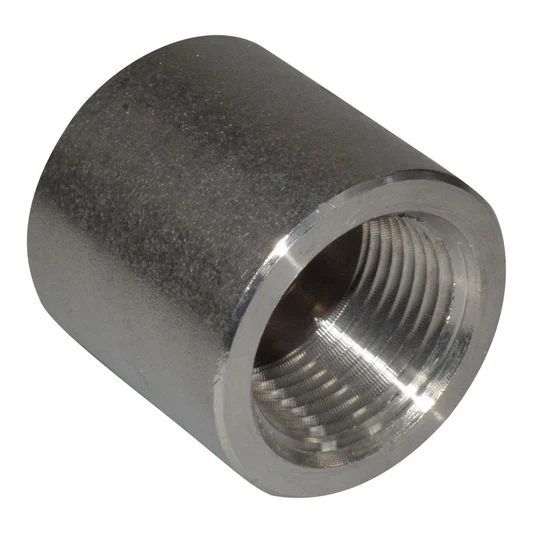
What is a Half Coupling and How is it Used in Piping and Plumbing Systems?
A half coupling is a type of pipe fitting used in piping and plumbing systems to connect two pipes of different sizes. It is a short, threaded piece with one end designed to be welded or screwed onto a larger pipe, and the other end allows for the attachment of a smaller pipe. The half coupling has internal threads on one end and a plain or beveled surface on the other end.
Half couplings are typically made from materials such as stainless steel, carbon steel, brass, or other suitable alloys, depending on the application and the medium being transported through the pipes.
In piping systems, half couplings are used for various purposes:
- Reducing Pipe Size: One common use of half couplings is to reduce the pipe size at a specific point in the system. For example, when a large pipe needs to be connected to a smaller pipe, a half coupling can be employed to create a smooth transition.
- Connection Points: Half couplings are often used at connection points where equipment, valves, or instruments are attached to the pipeline. They provide a secure and leak-proof joint.
- Repair and Maintenance: In the event of a pipe section damage, a half coupling can be used to cut out the damaged portion and replace it with a new pipe, facilitating quick repairs without the need to replace the entire pipeline.
The installation of a half coupling involves a few simple steps:
- Cutting and Preparing the Pipe: The larger pipe, to which the half coupling will be attached, is cut to the desired length, and the edge is cleaned and beveled to ensure a proper welding or threading joint.
- Attaching the Half Coupling: The half coupling is then welded or screwed onto the larger pipe end. For welding, proper welding techniques and safety measures must be followed to achieve a strong, reliable joint.
- Connecting the Smaller Pipe: The smaller pipe is threaded or inserted into the other end of the half coupling. The connection is tightened to ensure a secure fit, and sealing materials like Teflon tape or thread sealant may be used to prevent leaks.
In plumbing systems, half couplings serve similar functions, connecting different pipes or fixtures of various sizes. The installation process may vary slightly, depending on the type of plumbing materials and the specific application.
In summary, half couplings are essential components in piping and plumbing systems, enabling the connection of pipes with different diameters and facilitating repairs or adding connection points with ease and efficiency.


editor by CX 2023-11-09