
Product Description
Key attributes
Other attributes
Applicable Industries
Energy & Mining
Weight (KG)
750
After Warranty Service
Video technical support, Online support
Local Service Location
None
Showroom Location
None
Video outgoing-inspection
Provided
Machinery Test Report
Provided
Marketing Type
Hot Product 2571
Warranty of core components
1 Year
Core Components
worm gear
Heavy transmission gear box custom casting drive large worm gear and shaft
Place of CHINAMFG
ZheJiang , China
Condition
New
Warranty
12Months
Shape
Worm
Brand Name
TS
Material
copper
Standard or Nonstandard
Nonstandard
Direction
OEM
Product name
custom casting drive large worm gear and shaft
Application
Heavy gear box
Quality
High Quailty
Tolerance
0.01mm
Diameter
Min:200mm
Color
OEM
Heat treatment
OEM
MOQ
1 Piece
Standard
ISO
Material
Copper
OUR WORKSHOPS
OUR EQUIPMENTS
Technology Process
|
Material |
Carbon steel,Alloy steel |
||
|
Structure |
Forging,casting |
||
|
Type of gear |
spur gear,helical gear,Planetary Gear |
||
|
Heat treatment |
Quenching and tempering |
||
|
Process |
forging, rough machining, QT, finish machining |
||
|
Main equipments |
hobbing,CNC machine |
||
|
Module |
up to 200 |
||
|
Precision of gear |
Grinding ISO Grade 5-7 & Hobbing ISO Grade 8-9 |
||
|
Inspection |
Raw material inspection, UT,physical property test,dimension inspect |
||
|
Application |
Mining machinery, mill, kiln and other equipment |
||
OUR CERTIFICATE
OUR CUSTOMER FEEDBACK
CONTACT
/* March 10, 2571 17:59:20 */!function(){function s(e,r){var a,o={};try{e&&e.split(“,”).forEach(function(e,t){e&&(a=e.match(/(.*?):(.*)$/))&&1
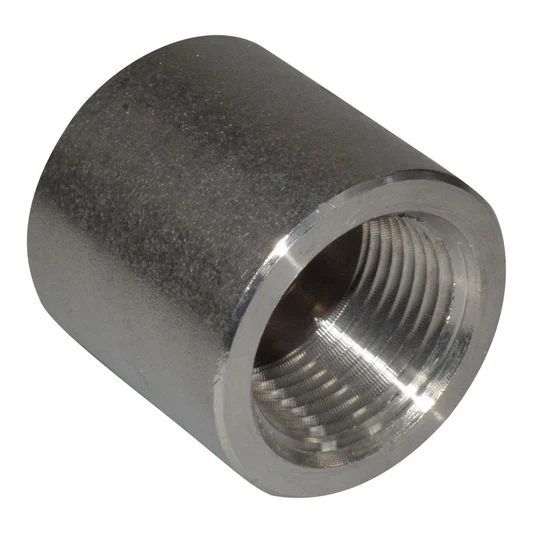
How do Temperature and Environmental Conditions Affect Half Coupling Performance?
The performance of half couplings can be significantly influenced by temperature and environmental conditions. These factors can affect the materials, integrity, and overall functionality of the coupling in various ways. Here’s how temperature and environmental conditions impact half coupling performance:
- Temperature: Extreme temperatures, whether high or low, can affect the properties of the coupling material. For instance, at high temperatures, certain materials may experience reduced strength and increased susceptibility to creep or deformation. On the other hand, low temperatures can make some materials brittle and prone to cracking. It is essential to select half couplings made from materials that can withstand the expected temperature range in the application.
- Corrosive Environments: Half couplings used in corrosive environments are exposed to chemical agents that can cause material degradation. Corrosion can weaken the coupling’s structure and lead to leaks. In such cases, using corrosion-resistant materials, coatings, or liners can be beneficial to maintain coupling performance and longevity.
- Humidity and Moisture: Excessive humidity and moisture can accelerate corrosion and contribute to the deterioration of the coupling over time. Regular cleaning and protection against moisture ingress are necessary to ensure optimal performance in damp environments.
- Abrasive Particles: In industrial settings with abrasive particles present in the fluid or environment, half couplings may experience wear and erosion. This can lead to surface damage and affect the coupling’s sealing ability. Selecting materials with high wear resistance and using filters or strainers to remove abrasive particles can help mitigate these effects.
- UV Radiation: In outdoor applications exposed to sunlight, UV radiation can degrade certain materials, particularly polymers and elastomers. Couplings made from UV-resistant materials or employing protective coatings can help counteract this effect.
- Thermal Expansion: Temperature fluctuations cause thermal expansion and contraction of the pipes and the half couplings. In systems where thermal expansion is not adequately accommodated, stress on the couplings can lead to leaks or joint failure over time. Providing expansion joints or using materials with low thermal expansion coefficients can address this issue.
- Altitude: At higher altitudes, air pressure is reduced, which can affect system performance, especially if the half couplings are not designed for such conditions. It is essential to consider altitude-related effects on pressure and temperature when selecting the appropriate coupling materials.
- Weather and Climate: Half couplings installed outdoors are exposed to weather conditions like rain, snow, hail, and extreme temperatures. These factors can impact the coupling’s integrity and performance. Regular maintenance and inspections become crucial to identify and address any weather-related damages.
To ensure optimal half coupling performance, it is essential to consider the specific temperature and environmental conditions of the application. Choosing suitable materials, applying protective coatings, and implementing proper maintenance practices are essential steps to enhance the longevity and reliability of half couplings in various operating environments.
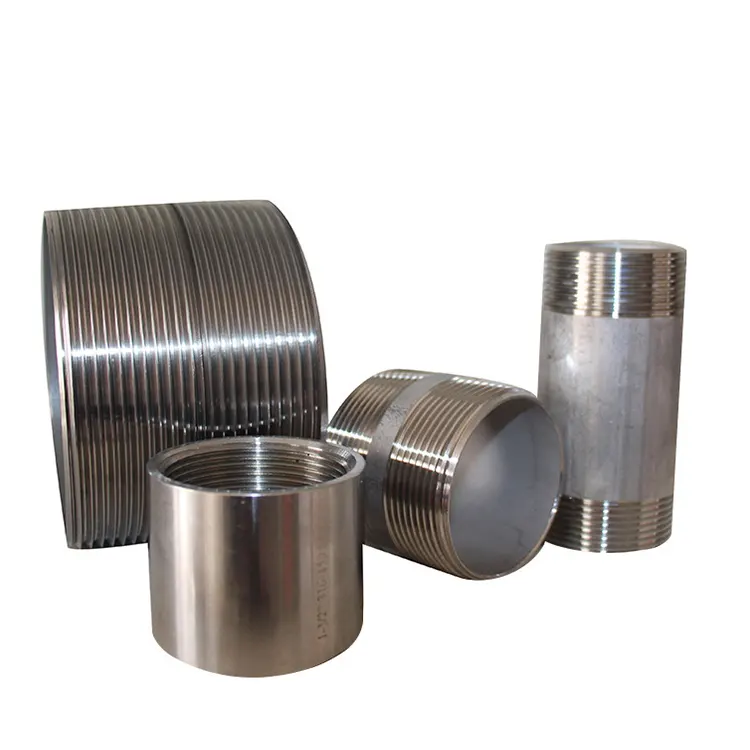
Can a Half Coupling be Used in both Residential and Industrial Applications?
Yes, a half coupling can be used in both residential and industrial applications, depending on the specific requirements of the plumbing or piping system. Half couplings are versatile fittings that find application in various settings due to their design and functionality.
Residential Applications: In residential plumbing systems, half couplings can be utilized for several purposes. They are commonly used in household plumbing repairs and installations where a secure connection between pipes or components is needed. For example, half couplings can be used to attach fixtures such as faucets, showerheads, or water heaters to the water supply lines. Additionally, they are employed in various DIY projects and renovations around the house, providing a reliable and leak-resistant connection between pipes of different sizes or materials.
Industrial Applications: Half couplings are extensively used in industrial applications due to their ability to connect pipes and components in a range of systems. In industrial settings, half couplings are employed in piping systems for water, air, chemicals, gases, and other fluids. They are commonly found in power plants, chemical processing plants, refineries, petrochemical facilities, and manufacturing plants, among others. These couplings play a crucial role in creating reliable joints for conveying materials and maintaining the overall integrity of the industrial processes.
While half couplings are suitable for both residential and industrial applications, there are certain considerations to keep in mind. For residential use, the materials and pressure ratings of the half couplings should be appropriate for household water supply systems, which generally operate at lower pressures compared to industrial systems. In industrial applications, the materials, dimensions, and pressure ratings of the half couplings must meet the specific requirements of the industrial processes, which often involve higher pressures and harsher environmental conditions.
Regardless of the application, it is essential to select high-quality half couplings that comply with relevant industry standards and are appropriate for the intended use. Proper installation and maintenance of the couplings are also crucial to ensure a leak-free and reliable connection in both residential and industrial settings.
Can a Half Coupling be Used to Join Pipes of Different Diameters?
Yes, a half coupling can be used to join pipes of different diameters in piping and plumbing systems. Half couplings are specifically designed to connect two pipes of different sizes, making them ideal for creating transitions or connections between pipes with varying diameters. The larger end of the half coupling is welded or screwed onto the larger diameter pipe, providing a stable base for the connection. The smaller pipe, which has a different diameter, is then threaded or inserted into the smaller end of the half coupling.
The ability to join pipes of different diameters is one of the main advantages of using half couplings. This feature allows for efficient and smooth transitions between pipe sizes, which is crucial in maintaining proper fluid flow, reducing pressure losses, and preventing turbulence within the system.
Here are some common scenarios where half couplings are used to join pipes of different diameters:
- Reducing Pipe Size: When a pipeline needs to change from a larger diameter to a smaller diameter, a half coupling can be employed to create a smooth transition. For example, if a process requires a reduction in flow rate, a smaller pipe can be connected to the main pipeline using a half coupling.
- Connecting Equipment or Valves: In many industrial applications, equipment, valves, or instruments are connected to the main pipeline using half couplings. Often, these components have different pipe sizes than the main pipeline, and a half coupling provides a secure and leak-proof joint.
- Repair and Maintenance: During repair or maintenance operations, a damaged section of the pipeline can be cut out, and a new pipe of a different diameter can be connected using a half coupling. This allows for quick repairs without having to replace the entire pipeline.
When using a half coupling to join pipes of different diameters, it is essential to ensure that the threads and dimensions of the coupling match the pipes being connected. Proper sealing techniques, such as using thread sealant or Teflon tape, should also be applied to prevent leaks and ensure a reliable connection.
In conclusion, half couplings are versatile pipe fittings that enable the joining of pipes with different diameters. Their ability to facilitate smooth transitions and secure connections makes them invaluable in various industrial, commercial, and residential applications.


editor by CX 2024-02-22